Showing posts with label wheatless. Show all posts

Thursday, July 14, 2016

Sprouted Quinoa Bread

This delightful roll is basically a by-product of making rejuvelac, which is an essential ingredient in cultured cheeses (will post about those soon). Rejuvelac is the leftover liquid from sprouted grains. This roll is a great way to make use of the grains. It's so tasty that it might actually be worthwhile to sprout the grains even if you don't have lofty cheese plans!

Ingredients for one roll (easy to double, triple, or quadruple the recipe):

1/2 cup quinoa
big jug/jar of water
optional: grated coconut, sunflower seeds, nuts, raisins, olives, rosemary, or anything you'd want inside bread

Measure and place quinoa in big jar and fill with water. Using a strainer to help you, change the water three times every 12 hours. When the quinoa grains develop visible tails, fill with clean water, place lid or other cover on jar and leave on counter for about two days.

Carefully strain the liquid (use it for making nut cheese). Place the sprouted quinoa in food processor and process until smooth. If desire, mix with the suggested additions (I did coconut and sunflower seeds and it came out amazing.) Spoon out the quinoa onto a lightly floured baking sheet and form a round little roll, or a loaf, or whatever. Place in oven, bake at 350 degrees (no need to preheat) for 30 mins, then at 325 for about 20 mins more (this phase might be longer if you're making a bigger loaf.)

Monday, February 08, 2016

Farinata de Ceci

This easy, savory chickpea flour pie is a great thing to eat and serve hot right out of the pan, and it's festive enough to entertain guests. If you have a rosemary bush at home, this is the time to use it! The recipe comes from Chloe Coscarelli's Italian cook book.

2 cups warm water
1.5 cups chickpea flour
3 tbsp olive oil, plus more for pan
1 tsp sea salt
1 tsp fresh rosemary
fresh ground black pepper

Mix water and flour in a bowl and let rest for 2 hours.
When ready, preheat oven to 500F. Place a round iron skillet in the oven to warm for 10 mins.

Meanwhile, skim foam off chickpea mix, add oil, salt and rosemary. Remove hot iron skillet from oven, add a bit of oil and swirl around to grease. Carefully pour batter into pan and pop back into oven for about 25 mins, or until lightly browned and crisp. Run a knife around the edges and unmold. Slice up and serve warm.

The leftovers, toasted in the oven the next day, are particularly wonderful with a bit of tomato sauce and vegan mozzarella!

Sunday, January 11, 2015

Old Skool Stir-Fry

 In the spirit of using up all our produce before our first CSA box arrives, here's an old-skool stir-fry, full of vegetables and wonderful things.

3 carrots
2 large zucchini
3 beets + beet greens
a bunch of asparagus
3 garlic cloves
1 square inch ginger
3 tbsp soy sauce
1 tsp vinegar
1 tbsp hot sauce
1 tbsp sake
1/2 package extra-firm tofu
1 spoon safflower oil

Chop vegetables into sticks or cubes. Cut tofu into 1/2 inch cubes. Mince garlic and ginger.

Place garlic, ginger and oil in wok and heat up until fragrant. Then, add soy, vinegar, hot sauce, and sake. Add tofu cubes to wok and sautee until coated with sauce. Add vegetables and stir-fry atop a medium-hot burner for about 20 mins. Serve over brown rice.


Friday, March 21, 2008

A Very Short Post About Breakfast


One Asian pear.
One persimmon.
Two tablespoons of strawberry-mango quinoa granola.
Juice from one blood orange.
YUM.
'Nuff said.

Thursday, March 13, 2008

My Favorite Wrap

My favorite wrap, these days - one that does not require any sophisticated cooking and relies on store-bought stuff - consists of the following delicious combination:

Sprouted Corn Tortillas!

Vegenaise!

Any kind of stone-ground mustard!

Tons and tons of fresh salad greens from the market!

And -

Baked Tofu, thinly sliced!

A good substitute for a sandwich, this is something you could not only eat at home, but wrap and take with you. And, given how busy I am (and the lack of time to cook to my heart's content), it'll have to do for a while.

Saturday, February 24, 2007

Quinoa Tabouli

Extremely easy recipe, and a good substitute for burgul, or, as Americans call it, "bulgur". True, not the traditional main ingredient, so probably not for purists; but very tasty nevertheless. Simply mix the following ingredients:

2 cups cooked quinoa
1 fresh cucumber, chopped into teeny-tiny pieces
3 tbsp chopped fresh parsley
1 tbsp chopped cilantro
juice from 1 lemon

optional:
1/2 chopped tomato
1 tbsp chopped onion
1 tbsp pumpkin seeds and/or pine nuts

Then, put salad in fridge and let marinate for a while.

Tuesday, January 30, 2007

Comment on Oat Cakes

The oat cakes for, oh, four posts ago - they work even better if you substitute the cornflour with brown rice flour. They even rise, muffin style!

Friday, January 19, 2007

Oat Bran Cakes


Hi, all -

I know I've been very neglectful of the blog; I hope some freshly cooked/baked entries will improve the situation!
One thing we don't like talking about is constipation, and how important "being regular" is to our wellbeing throughout the day. Here's a nice treat that's excellent with your breakfast tea, and can be a daytime snack, as well.

Heat up the oven to 200 degrees celsius.

1 1/2 cups oat bran
3/4 cup corn flour
2 tsp baking powder
1 tsp cinnamon
1 apple, chopped into tiny pieces
1/2 cup dried prunes, chopped up
1/2 cup raisins, or cranberries, or both

Mix up in a bowl. (bowl #1)

2 egg whites
3 tbsp oil (I use canola)
4 tbsp honey
1/2 a cup apple juice concentrate, or apple sauce/puree
1 tsp vanilla extract

Mix up in another bowl. (bowl #2)

Gradually add contents of bowl #2 to bowl #1, while mixing.

Pour mixture into muffin pan, and bake for about 15-20 minutes, or until tops are golden and a fork stuck into the cakes comes out clean. Enjoy!

Thursday, October 19, 2006

Sandwich Substitutes for the Wheat Intolerant

The schoolyear is here! It begins on Sunday. With all the joy and the preparation comes, for some of us, the concern over what we'll be eating throughout our academic days. Cafeterias abound, but one not always has time to sit through an entire meal, when a hefty tome can be read in one's office while snacking.

The usual answer to this problem is the quintessential sandwich, sold at every cafeteria on campus. But what will those of us with wheat allergies do? I can't possibly have a sandwich every day; crime, in this respect, doesn't pay. Therefore, I have to get creative about my snacking habits.

Here are some ideas for sandwich substitutes I've come up with. Usually, if I stick to them, they keep me happy until the end of the day.


Microwaved Potato

Microwaving a potato takes five to six minutes, and can be done during your morning cup of tea. They are very easy to pack, and can be filled with various sandwichlike stuff, like pesto, cheese, and cooked vegetables from yesterday meal. Pack in foil or in a ziplock bag and enjoy.


Squares of Cheese

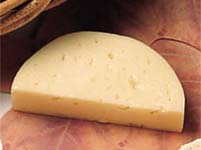
Nice hard goat cheese keeps me happy in a way vegetable sticks never can. Simply cut out squares and stick in a bag (better on cold days, of course).


Vegetable Sticks

The trick: pack them in a plastic box with a little bit of water. Keeps them from becoming shrivelled, dry and unappetizing. Want this to be more satisfying and less masochistic? Take with you a small container of tchina or eggplant salad.


Organic Soup Packages

If there's a hot water machine at the office, you can have yourself an instant cup of soup. Somehow, soup feels more filling than tea, perhaps because we tend to categorize it as "food" rather than "drink". Better yet, keep a bag of miso and a block of tofu at the office and get instant miso soup.

After the beginning-of-the-year-stress, we'll be back cooking and writing about it. Good luck with school, and everything else!

Thursday, July 13, 2006

The Leaning Tower of Pesto


(pic to come)

Yes, we're still jetlagged. But when has that stopped us from eating?

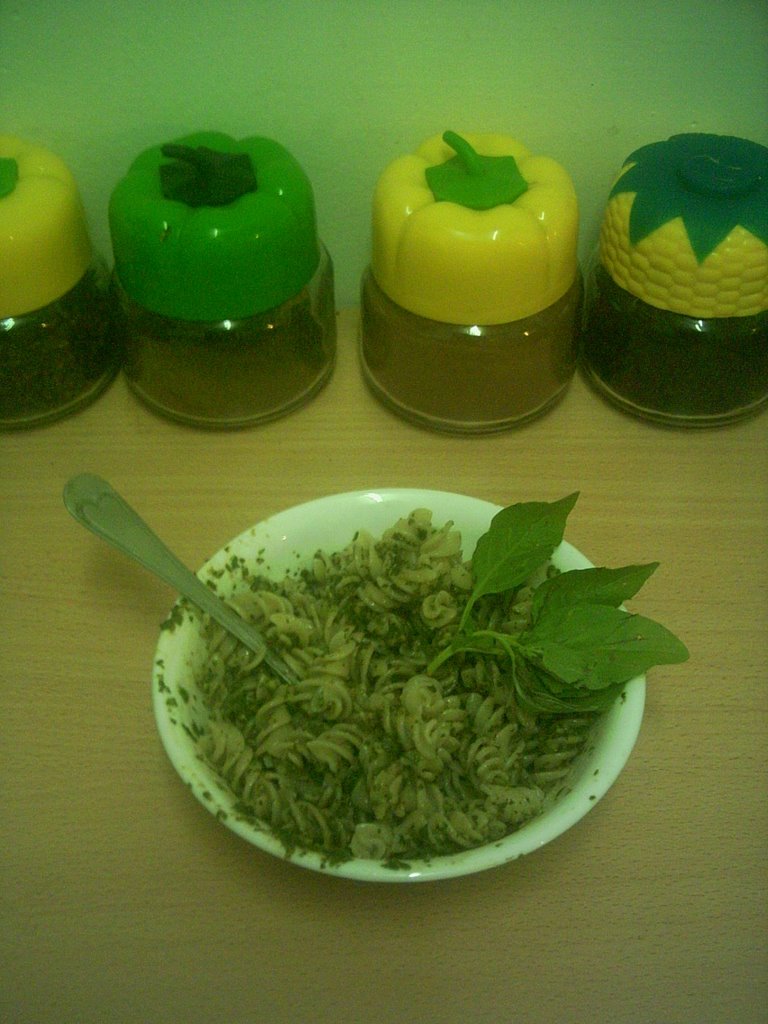
Meals are still regularly served at Hadar and Chad's home, even if they consume their breakfast at 3am, their lunch, well at about 8am, and their dinnner anywhere in between. And since our Chubeza delivery included fresh basil, and we were very hungry, something had to be done immediately.

Fortunately, our food processor was up to the task, and we were able to produce two dangerously unbalanced bowls of Tinkyada brown rice pasta with fresh, simple, homemade pesto. I know, not a remarkable feat. And yet, here it is. I wish I could comment on how well this keeps in the fridge, but as I said, we were hungry, and the entire batch was immediately consumed.

Homemade Pesto Sauce

2 cups fresh basil leaves
1/2 cup excellent quality olive oil
3 tablespoons pine nuts
3 large garlic cloves
1 tablespoon salt

Mix in food processor (adding small batches of stuff at a time). Then, mix with pasta. Eat, enjoy, rest in simplicity.

Saturday, May 06, 2006

What's the Deal About Wheat Intolerance?

(photo from here)

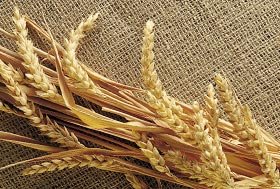
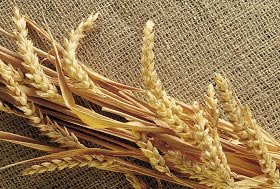
There is so much talk about wheat and gluten these days. Or perhaps I hear more of it because it's interesting to me. Various conflicting opinions are offered. Websites and information geared at food intolerant folks tend to emphasize how common the symptoms are - 15% of the population is estimated to be sensitive to either gluten or another component in wheat, and 33% to yeast, which composes most of the bread we eat. On the other hand, the British Nutrition Foundation reports that wheat intolerance is very uncommon. Naturally, none of these sites is unbiased, and as with other food issues, this one is highly political. Because wheat is a food staple and generates much income for the middlemen in the process of transferring it from the grower to the customer. For more info on these matters, do visit Parke Wilde's excellent blog, US Food Policy. But let's focus on wheat, for a minute.

There are a number of issues that could lead to bad symptoms when responding to bread, pasta and similar foods. It's important to distinguish them, though in real life it may not be that easy.

1. Wheat Allergy, like other food allergies, refers to immediate and drastic responses to the consumption of wheat, which could include anything from hives to vomiting to swelling to loss of consciousness. Read more about how to test for food allergies.

2. Wheat sensitivity, or intolerance, is apparently less drastic and much more common. The sensitivity could be an outcome of any of the following reasons:

(a) Gluten intolerance, with celiac being the most severe form. Celiac can be tested for, and apparently has been identified as a genetic problem and related to autoimmune diseases. Gluten is the protein which makes bread elastic and fluffy. Celiac, at its worst, can be extremely dangerous and lead to death.

(b) Yeast intolerance, which is sometimes confused with wheat intolerance, because the main way we consume wheat is through bread with yeast. Yeast infections of various kinds often involve the growth of unhealthy yeast in the colon, with candida being quite notorious in causing digestive problems, bloating, gas, fatigue and other symptoms. Candida problems, and other yeast related issues, are extremely difficult to diagnose, and conventional Western medicine will usually not be quick to detect and acknowledge them. One way nutritionists identify candida is using screening questionnaires, which can point them to a probability that the cause of suffering has to do with yeast. Here's one such questionnaire, from the informative website of Donna Gates, author of the well-researched and helpful book The Body Ecology Diet.

(c) Intolerance to other components of wheat. The wheat used all over the world nowadays is propagated by an extremely wealthy group of agribusinesses; and, as we now know, this was not always the case. In the attempt to modify wheat so that it can be easily grown in gargantual quantities, wheat was breeded and treated in certain ways which led it to become resilient and easily grown. Some folks may not respond well to these ways, and sometimes the intolerance emerges particularly from the fact that wheat has become so uniform and common as to make other forms of ancient wheat, like kamut and spelt, quite rare.

(d) Sometiems, the intolerance is not to wheat in itself, but to the various pesticides wheat is sprayed with. Obviously, this problem is not unique to wheat. The issue here is that the huge amounts in which wheat is grown probably involves economic considerations in choosing these pesticides. Again, in these issues it's difficult to find an unbiased opinion.

What's the deal, then? Are you sensitive to wheat or not? If one feels symptoms such as stomach ache, bloating, gas, abdominal discomfort, fatigue and extreme changes in weight, as well as cravings for sugar and starch, one should definitely seek the advice of both a doctor and a good holistic nutritionist. The latter will probably help you get on an elimination diet, which will help you learn more about the foods that agree and do not agree with you. Even if you are not sensitive to wheat, it's probably a good idea to vary your diet with various types of grain, as each of them offers different nutritional components.

Finally, to learn more about food intolerance, and digestive health in general, do read Elizabeth Lipsky's excellent book Digestive Wellness. It's a very good resource on various health issues and offers very helpful advice.