Every day you learn something new. The other day, for example, we were handed a flyer in the street, inviting us to join a vegetarian dating service.
A quick checkup when we got home (we were curious) revealed that the board is a project of Anonymous, one of Israel's oldest and most active organizations for animal rights. On their website, they are operating a vegetarian dating board, to which people post about their interests. Is this a unique venture? Apparently, there are others, like the American Veggie Date, which allows vegetarian applicants to specify whether their vegetarianism is related to religious or ideological concerns, and of which flavor.
Of course, what I asked myself was why. I mean, is vegetarianism such a fundamental trait that folks would apply to a specified board, because they wouldn't even consider dating meat eaters?
I suppose everyone's answer to that is different. Mine is, yes and no. There are some personal habits that I more easily identify as deal breakers. Smoking is one of those; nearly any dating board you see has a smoking/nonsmoking information. It's quite difficult for smokers and nonsmokers to live together. One could also think of more than one milieu where people of different political opinions would find it difficult to share a household.
But what about nutrition? I've seen Israeli families successfully negotiating the issue of keeping Kosher in the house. Usually, the solution is that the secular person gives in, since the religious person can't. It seems that vegetarians and carnivores can coexist even more easily, particularly if no separate dishes are required for meat. Even if the vegetarian party dislikes having anything to do with meat - including cooking it - the carnivore can chip in (actually, this could happen even with squeamish, not necessarily vegetarian, spouses).
The substantial problem arises when vegetarianism comes from a strong ideology, where the person can't live with someone who eats meat because that's taken to signify that the prospective partner is a cruel, insensitive person. I imagine in this case, vegetarianism in itself is not the issue, but it is rather an index of a whole other set of values.
Wednesday, October 25, 2006

Thursday, October 19, 2006
Sandwich Substitutes for the Wheat Intolerant
The schoolyear is here! It begins on Sunday. With all the joy and the preparation comes, for some of us, the concern over what we'll be eating throughout our academic days. Cafeterias abound, but one not always has time to sit through an entire meal, when a hefty tome can be read in one's office while snacking.
The usual answer to this problem is the quintessential sandwich, sold at every cafeteria on campus. But what will those of us with wheat allergies do? I can't possibly have a sandwich every day; crime, in this respect, doesn't pay. Therefore, I have to get creative about my snacking habits.
Here are some ideas for sandwich substitutes I've come up with. Usually, if I stick to them, they keep me happy until the end of the day.

Microwaved Potato
Microwaving a potato takes five to six minutes, and can be done during your morning cup of tea. They are very easy to pack, and can be filled with various sandwichlike stuff, like pesto, cheese, and cooked vegetables from yesterday meal. Pack in foil or in a ziplock bag and enjoy.

Squares of Cheese
Nice hard goat cheese keeps me happy in a way vegetable sticks never can. Simply cut out squares and stick in a bag (better on cold days, of course).
Vegetable Sticks
The trick: pack them in a plastic box with a little bit of water. Keeps them from becoming shrivelled, dry and unappetizing. Want this to be more satisfying and less masochistic? Take with you a small container of tchina or eggplant salad.
Organic Soup Packages
If there's a hot water machine at the office, you can have yourself an instant cup of soup. Somehow, soup feels more filling than tea, perhaps because we tend to categorize it as "food" rather than "drink". Better yet, keep a bag of miso and a block of tofu at the office and get instant miso soup.
After the beginning-of-the-year-stress, we'll be back cooking and writing about it. Good luck with school, and everything else!
The usual answer to this problem is the quintessential sandwich, sold at every cafeteria on campus. But what will those of us with wheat allergies do? I can't possibly have a sandwich every day; crime, in this respect, doesn't pay. Therefore, I have to get creative about my snacking habits.
Here are some ideas for sandwich substitutes I've come up with. Usually, if I stick to them, they keep me happy until the end of the day.

Microwaved Potato
Microwaving a potato takes five to six minutes, and can be done during your morning cup of tea. They are very easy to pack, and can be filled with various sandwichlike stuff, like pesto, cheese, and cooked vegetables from yesterday meal. Pack in foil or in a ziplock bag and enjoy.
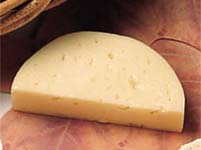
Squares of Cheese
Nice hard goat cheese keeps me happy in a way vegetable sticks never can. Simply cut out squares and stick in a bag (better on cold days, of course).
Vegetable Sticks
The trick: pack them in a plastic box with a little bit of water. Keeps them from becoming shrivelled, dry and unappetizing. Want this to be more satisfying and less masochistic? Take with you a small container of tchina or eggplant salad.
Organic Soup Packages
If there's a hot water machine at the office, you can have yourself an instant cup of soup. Somehow, soup feels more filling than tea, perhaps because we tend to categorize it as "food" rather than "drink". Better yet, keep a bag of miso and a block of tofu at the office and get instant miso soup.
After the beginning-of-the-year-stress, we'll be back cooking and writing about it. Good luck with school, and everything else!
Saturday, September 23, 2006
Istanbul Foods

Not much cooking this week... we were not home. Locked up the door, gathered some clothes up in a suitcase and went off to beautiful Istanbul, once capital of the vast, corrupt, excessive Ottoman empire.
Istanbul is beautiful. That can be read in any tourist guide. The city showcases the magnificent architecture of Sinan, a genius employed by Suliman the Magnificent for planning gorgeous mosques with blue domes and sharp-pointed minarets. The insides of the mosques are also beautiful; in the absence of religious imagery, Muslim artists perfected calligraphy and did wonders with it.
Now, as to the food (that's what we're all here for, after all): we were warned that there would be no vegetarian options. And, we were warned that the food is not hygienic and we should exercise great care in eating. The first of these warnings is a myth and has been thoroughly debunked. We ate plenty of very good vegetarian food. Fresh salads are available everywhere; and so are various interesting dishes made with beans, rice, eggplant, and excellent yogurt. A good example is the wonderful kidney bean salad in the picture, which you can find in this Turkish recipe website. The second, however, should be remembered well. While travellers with iron-clad stomachs will probably feel okay even eating things in the street, folks with some sensitivity to food might experience diahorrea, nausea, or (as in my glorious case) a combination of the two.
What do you do when you get food poisoning or sensitivity on a trip?
My suggestion: eat nothing. The body needs some time to work things out and get well again. Drink plenty of clean good-quality water, supplementing it occasionally with something sweet, like some honey or a date or raisins (so you can keep your energy). The stomach needs some rest and it will eventually sort itself out. When you feel a bit better, often on the second day, the Mapa Guide for Natural Healing recommends eating some fruit, drinking some juice, and having some bio yogurt and/or mashed potatoes. Following these instructions, I recovered within two days, and though they weren't very pleasant, they taught me something about the body's ability to clean out agents that cause toxicity and bad sensations.
Saturday, September 16, 2006
The Olives: Part Three
Hiya, all!
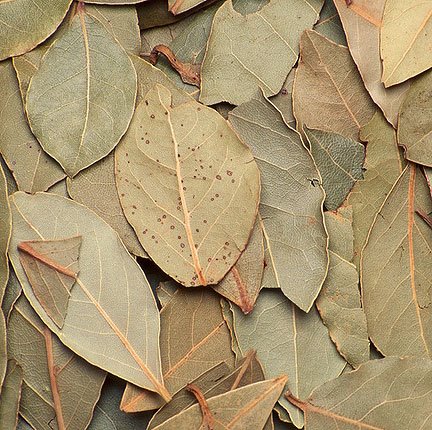
This final post in the "olives" series is also my entry for my dear, dear pal Barbara's spice challenge ("going back to school" and learning about spices). Now that the olives are ready - and that bay leaves had such an important part in creating their beautiful flavor - let's learn a tad about them.
From the McCormick Spice Encyclopedia:
Bay Leaves or Laurel, are the dried leaves of the evergreen tree, Laurus nobilis. The elliptically shaped leaves are light green in color and brittle when dried. They have a distinctively strong, aromatic, spicy flavor. Bay Leaves is the approved term for this spice, but the name "laurel" is still seen frequently.
In Ancient Greece and Rome, bay leaves and branchlets were used as wreaths to crown their victors. Champions of the Olympic games wore garlands of bay leaves. Our word "baccalaureate" means "laurel berries" and signifies the successful completion of one's studies. It alludes to the bay wreaths worn by poets and scholars when they received academic honors in ancient Greece.
Whenever I make soup, pasta sauce or anything that needs to taste rich, I add a leaf or two. They somehow add that little extra punch, and it's hard to explain what, exactly, it is they do, but somehow they make any less-than-perfect soup, chowder or sauce, perfect.
Since bay leaves are quite strong in flavor, they are to be used in small quantities and discarded before eating. In the process of making olives, we added one or two leaves to each of the jars.
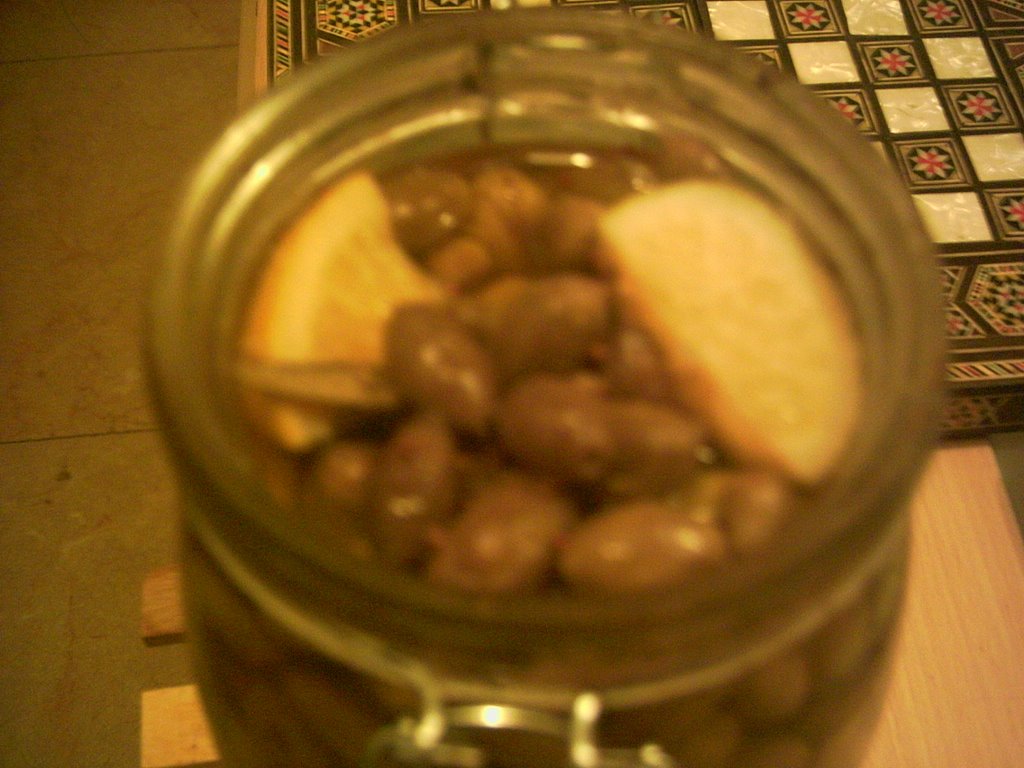
The picture really doesn't do the olives justice. They came out delicious, and I suspect if we give them a few more days they'll be even better. So, here's the now-tried-and-true way to do it:
1. Upon getting your olives off the tree, soak them in clean water, for three days. Change the water daily. Optional but really improves the olives: make a small cut in each of them with a knife, or pound them with a heavy object so they are cracked. They will be tastier and absorb the marinade better and faster.
2. On the fourth day, get nice, clean jars and the following ingredients per 1 kg of olives:
* 1 red hot pepper
* 1/2 lemon
* 1 tablespoon black pepper, unground
* 1 tablespoon mustard seeds
* 1 bay leaf
optional ingredients:
* 1-2 garlic cloves sliced in half
* 1 rosemary twig
3. Make a water-salt solution - 1 heaped tbsp salt to 1 cup water. You know it's salty enough when an egg placed in the solution floats up.
4. Place the olives and the spices in the jars:
* First, put a couple of red peppers and two lemon slices in the bottom.
* Cover with a thick layer of olives.
* Sprinkle some pepper and mustard on top.
* Cover with olives.
* Place bay leaf and additional stuff, if you want to.
* Cove with olives.
Repeat until jar is full.
5. Then, pour on top of the olives the salty solution, all the way to the top.
6. Seal with a layer of olive oil and/or wine vinegar.
7. Let stand in a cool, dark place, for about two weeks.
8. Find out when your friends' birthdays and anniversaries are, so you can give them olives. Don't have any olives? Let us know and we'll send them some!
Monday, September 11, 2006
A Dessert from the Past: Flan!
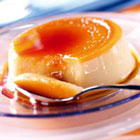
Seasoned readers of this blog have probably gathered that I don't eat a lot of dessert.
I try to stick to fresh fruit for my sweets, and it works out fine for me, especially as I really love fresh fruit. This week's fare has included juicy nectarines and cactus fruit (peel carefully! the thorns, which protect the cactus for predators, do exactly what they are supposed to - and it stings!). But there's one big exception to this rule - and that's when Chad makes Flan!
Flan, a lovely and creamy milk, egg and caramel custard, is a dessert we both grew up with as kids in Ecuador. There are commercial versions, which are not bad at all, and then there's the home-made variety, which is fabulous.
The trick with flan is to mix the milk and eggs really well and leave some bubbles in the mixture, though not for too long, because too much foam ruins the creamy texture. It can also be seasoned with various treats - I'll place some good recommendations below. The picture above is taken of an anime site, battleangel.info (of all places!), because ours was eaten too fast to be photographed. But it was equally delicious!
Flan
Deep baking dish (shallow dishes make for shallow flans).
For custard:
2 eggs + 2 yolks
2 cups of milk (for this dish, cow milk works better than goat milk)
1 tsp vanilla
optional: 1-2 tsps sugar (if the topping is sweet, you can do without)
optional seasonings: lemon peel; cardamon; cinnamon; nutmeg; or, for coffee flan, a teaspoon of good espresso powder
For caramel topping:
1 cup sugar
1/8 cup water
Heat up oven to about 180 degrees celsius.
Heat up milk with spices and let cool.
Meanwhile, caramelize the sugar: heat it with water, constantly mixing it, until it reaches syrup consistency. It doesn't have to become solid, but it's preferrable if it's solid enough to be sticky.
Whisk milk with eggs until there's little bubbles everywhere, but don't make too much fluff.
Coat baking dish with caramel, then pour milk and egg mixture on top.
Bake for about 30 to 45 minutes, or until a toothpick or a knife goes in the flan and comes out clean and dry.
Wait till it cools, then slowly and carefully use a knife to separate sides of flan from the dish. When you've done this to the best of your ability (patient people do better at this stage), invert the flan onto a plate. Whoa! There's caramel on top! Have fun.
Thursday, September 07, 2006
Whole Grains Chart: A Service to the Public

In her fabulous book Sunlight Cafe, Mollie Katzen devotes a special chapter to whole grains and their cooking methods. In her honor, and as a service to the public, I'm posting a modified version of her excellent grain cooking chart.
Grain Water (cups) to 1 cup grain Cooking Time Yields (cups)
Oat Groats 2.5 40-45 mins. 3
Brown Rice 1.5 35-45 mins. 3.5
Wild Rice 2.5 1 1/4 hours 4
Pearl Barley 3 1 1/2 hours 4
Quinoa 1.5 25-30 mins. 3
Millet 1.5 25-30 mins. 3
Buckwheat 1.5 10 mins. 3.5
Amaranth 1.75 25 mins. 2
Happy cooking!
Wednesday, September 06, 2006
The Olives: Part Two
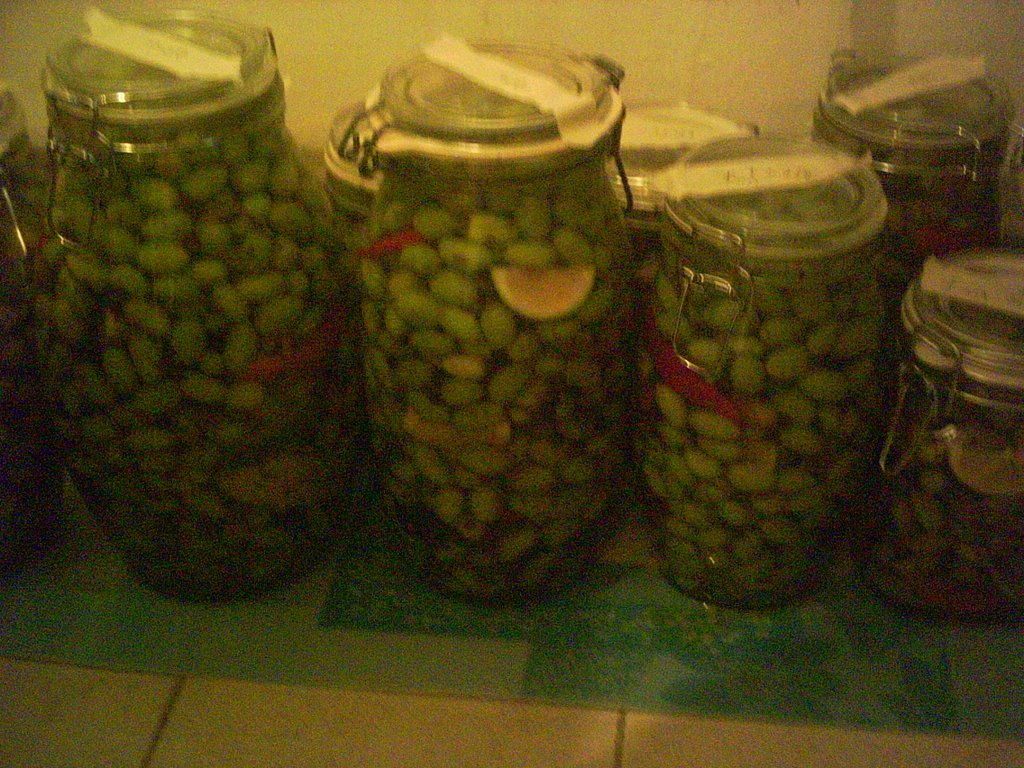
What we see here in the picture, folks, is our new "olive cellar", containing - yes - FIFTEEN jars of olives!
We used different recipes for the olives. About half of them are what we call here zeitim dfukim - olives that were broken so their pickling will be more thorough and take longer. The other half we left whole. The solution is salt water, and the spices include fresh lemons, spicy red peppers, black peppers, mustard seeds, and occasionally garlic and rosemary and red wine vinegar. We still don't know how they are going to come out, but we'll keep you posted.
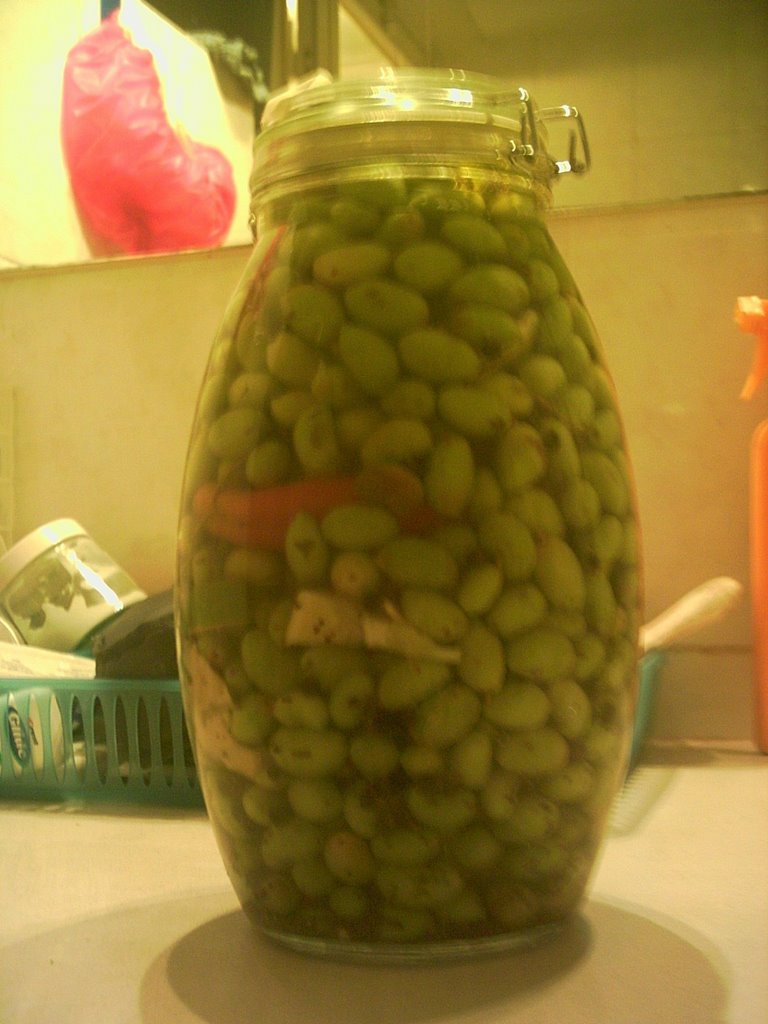
What we see here is a jar with layers of olives, lemons, peppers etc. Here's the way we did it:
1. We let the olives sit in water for four days, changing the water every day.
2. We washed the jars well (some folks even boil them to sanitize)
3. We cut about one lemon per jar into eight pieces. We peeled some garlic cloves and made a small dent in them with a knife. We prepared bay leaves, black unground pepper, mustard seeds, and rosemary twigs next to the spicy red peppers, lemons and garlic.
4. We placed two or three lemon slices and a hot pepper at the bottom of the jar, then layered with olives.
5. Then, we placed one or two bay leaves (per jar) and some of the other spices, depending on what we wanted the jar to be like. Then put some more olives, and so on and so forth.
6. With some jars, we added about a third of a cup good quality wine vinegar.
7. We placed an egg inside a large pot and filled the pot with water (the egg sank to the bottom). We started adding salt - about 1 tablespoon per cup of water - and mixing it with the water. Whoa! The egg started floating! That meant the solution was ready.
8. We filled the jar with salt water, on top of the olives.
9. We "sealed" the olives with a thin layer of olive oil on top.
10. We closed and sealed the jar, and put it in a dark, cold place (poor olives).
Now we wait.
And here at the blog, it'll be back to our previously scheduled programs.
Tuesday, September 05, 2006
The Olives: Part One

My gentle readers have probably noticed how useful olive oil is in our Tel Aviv kitchen; there's hardly a recipe without it. Olives, and olive oil, are an inseparable part of the Israeli landscape, and often become the symbolic subjects of political struggle over the land.
There is a large, ancient olive tree in my parent's house, which yields "Syrian olives" of the small and bitter variety - the very best, in my opinion. This year the tree was full of fruit, and we decided to pick it and pickle it. My grandpa tried to dissuade us of the plan. A few years back, he had harvested much of the tree, and ended up pickling twenty enormous jars of olives, thinking he would give them out later as gifts. Hah! After a few weeks, no one in their circle of family and friends could bear the sight of olives, not to mention eating them, and the consumption took, well, quite a while.
But we were not convinced, and early on Saturday we charged the tree and started picking fruit. We spread large sheets under the tree and used two methods. First, we beat the branches - vigorously, but not ferociously - with Chad's martial art bamboo swords. Much of the fruit fell to the ground while the branches remained intact. Then, we went over the branches and hand-picked what was left.
That took about three hours.
Then, we had to start sorting the olives; there is a certain fly who stings them and leaves a worm inside the pit. So, we looked for tiny imperfections to examine whether they were fly bites. That took four hours and we hadn't finished by the time the sun set. Gaaaaah! One really learns to appreciate olives after such hard work.
Then, at home, Chad took half the amount of olives and "broke" them. Syrian olives are wonderful when they are cracked; there are various methods to do it, and his enterprising engineer nature led him to use our citrus juicer.
Now, all our olives are happily soaking in water, and will be pickled tomorrow. This is what our bathroom looks like:

What you can't see in the picture is the large bucket of cracked olives, fermenting.
More updates in the following days!
Monday, September 04, 2006
Madison County in Tel Aviv
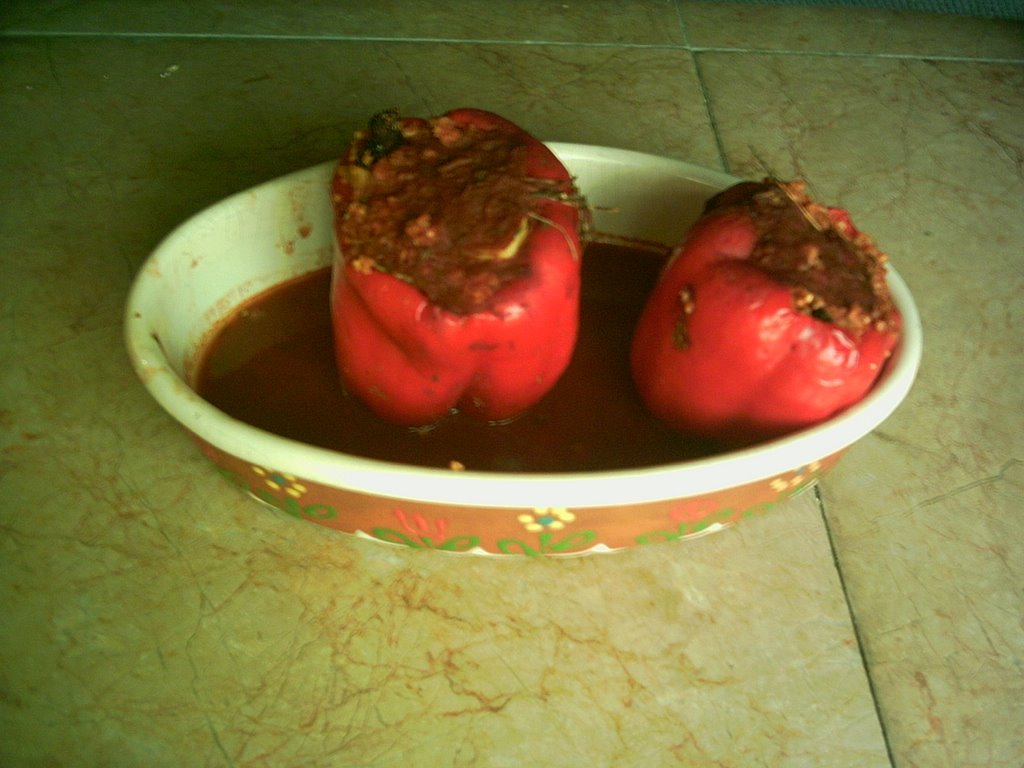
Stuffed peppers... not necessarily a romantic dish, isn't it? When we think of romantic dining, some delicate, nouvelle-cuisine thing in delicate china comes to mind. Preferably something that is eaten sensually (and optimally fed to the other person, by hand). Stuffed peppers don't exactly fall into that category. Or do they?
For me, they do. And the credit all goes to Robert James Waller's The Bridges of Madison County. The book (for those of you who haven't read it, and there can't be too many who haven't heard about it) is an amazing, tear-jerking story of an Iowa housewife who meets a National Geographic photographer. The two fall in love - an unpredictable, all-consuming, impossible love. And one of the exotic features about the photographer - who is so different from the housewife's husband and all other men she knows - is his vegetarianism.
So, she makes him stuffed peppers. She stuffs them with wild rice and cheese. And it's a lovely, romantic, fabulous dinner.
Now here's why stuffed peppers are such a romantic food. First of all, they are extremely sexy. The contrast between their bold, colorful exterior and their comforting, nutritious interior is beautiful to see and fabulous to eat. Second, they are messy. Beautiful before touched, they require crossing a boundary when cutting into them and spilling their goodness on the plate. And third, they are soaked in good tomato sauce - the sexiest sauce of all, in my humble opinion.
The version photographed here (and eaten for lunch today by a hungry man studying for a university exam and his blogging girlfriend) is a bit unusual, and consists of cooked millet, leeks and dried tomatoes. You can be quite creative about the filling and many whole grains will do fine; the millet, however, tends to absorb flavors and liquids, sort of like couscous. Enjoy!
Stuffed Peppers with Millet, Leeks and Dried Tomatoes
4 large, nice, red peppers
2 leeks
1 1/2 cup cooked millet
3 garlic cloves
5-6 dried tomatoes
2 tablespoons rosemary, thyme, or (best) mixture of the two
2 1/2 cups good quality tomato sauce (or, if you're in a hurry, make a quick sauce by quickly mixing, without cooking, tomato paste, water, herbs and crushed garlic)
Cut the top of the peppers and remove as many of the seeds as you can.
Slice the leeks into little circles. Chop up the garlic cloves, and heat up the cloves and leeks in a pan with a little olive oil. Add cooked millet, chop in the dried tomatoes and herbs, and mix with a few tablespoons of the tomato sauce - until the millet's "thirst" is "quenched" and it's soft and moist.
Place the peppers in a baking pan so they stand firmly, and stuff each of them with the millet mixture. Pour the remaining sauce on top of the peppers (and make sure at least 1 cm of the baking pan is covered in liquid). Stick in a hot oven for about 35 minutes, or more if you want the peppers softer. If they get dry, add a bit of sauce and water on top.
Saturday, September 02, 2006
Food is More than Chemistry

A few weeks ago I was stranded in an airport with a pal of mine on the way to a conference. We sat in a little coffee shop, having juice and tea, and talking about various interesting ways in which people relate to their bodies. She said: "Have you noticed how Americans always refer to eating and drinking in scientific terms?" She was right, of course. How many times have you heard someone say "I need my caffeine" rather than "I want to drink coffee"? How many times has someone ordered a smoothie not because they wanted one, but because they "need their vitamins"?
There are so many ways to relate to food. Some people numb their senses to health, binge on alcohol, sodas, sweets and fats, and contribute to the high rates of heart disease and obesity (both of which also have genetic componenets). Others become gourmet fanatics and impose highly-refined and expensive standards of wining and dining on themselves and on others. And some become body chemists rather than living, eating people; food loses its joys, smells, shapes and aromas, and becomes a set of particles required for maintaining the organism.
Why do people do that? Why would anyone eschew the pleasures of eating to regard it as merely good practical science? I have no idea; it could be, to some extent, related to the medicalization of diets. In a society obsessed with thinness, interest in calories, carbs, fats and proteins increases. We are bombarded daily with good and bad science about how what we eat contributes to how we function and to what we look like. I think the health obsession, maligned by the ones who are trying to label "orthorexia" an eating disorder, is a close sister to thinness obsession and often tries to mask it. We say "we're eating healthy" to mask the fact that we want to lose weight or maintain our diet achievements. Under these conditions, it is not surprising that our constant concerns with what we eat have turned into meta-science.
We are, of course, right to be concerned. Supermarkets and chains feed us sprayed, chemical-treated food devoid of nutrition. American food prices create strong incentives for purchasing boxes of mac 'n' cheese over a nice bag of tomatoes. I've seen it often at Safeway or Albertson's: a tired mother, standing in line in front of me, short on cash, and on a budget, trying to figure out how to feed her children for the week, and opting for the cheaper option - a humongous set of cardboard boxes of instant food ("just add water"). The dry and chemical-ridden food was, itself, exciting science at some point; isn't it ironic how now we regard other foods as such? It *is* upsetting that the machinations of food corporations has weakened us so much that health considerations have become a luxury. Here, in Israel, things are somewhat better, as vegetables and fruit are very affordable; and yet, whole grains and organic produce is still not easily available.
So, yes, there is cause for concern. And there's all the more reason to encourage healthy, organic, local food production, and to mind what we are putting into our bodies. But while we're at it, can we perhaps enjoy the food? Consider a nice fruit plate for breakfast. Yes, it offers sugar and vitamins and available energy. But that is not the (only) reason we eat fruit.
It begins with how they look. Their amazing array of colors, shapes and textures. It continues with their tropical intoxicating aroma. And it ends in their sweetness and tartness, and set of complex flavors. First and foremost - eating fruit is an enjoyable experience. The vitamins are important, but they are only part of the experience.
I'll be heading off now to eat a load of passion fruit and figs for breakfast; it'll likely make me smile, and give me an uplifting sensation that all is well. At the same time, yes, it'll introduce some vitamins and energy into the "system". Such is the magic of living things: we - and what we eat - are a web of complex science, and at the same time, so much more than that.
Friday, September 01, 2006
Bamia/Okra
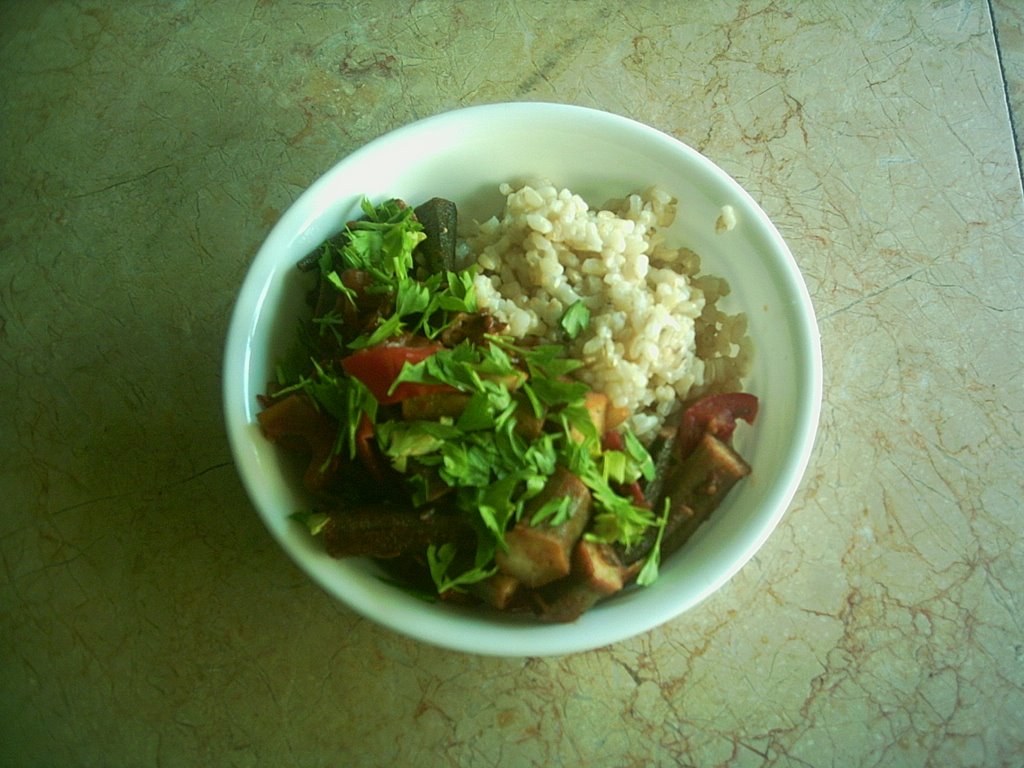
Okra, or Bamia, as we call it in Israel, is a much maligned vegetable. It stands, right next to cilantro and buckwheat, on the love-'em-or-hate'em shelf of foods in our collective consciousness.
When I came to the US, I discoverd, to my surprise, that breaded and fried okra was a Southern delicacy. I've also had it in Indian restaurants as Bhindi Masala - which is how my dear friend and heart-sister, Barbara, makes it.
Here, in the Middle East, we like our bamia in tomato sauce, over rice. It's an Egyptian recipe, apparently, and quite a favorite among those who like bamia. This week we were really fortunate to get a beautiful variety of bamia from Chubeza: it was dark burgundy, with a flourescent green stripe on the side. So, we set out to cook it.
Now, here's the tricky part: the folks who hate bamia, hate it because it produces a strange, mucuos-like substance. Ick, indeed. But the trick to eliminating that part of the experience is lightly frying the bamia before cooking it in the sauce.
Bamia in Tomato Sauce
3 cups of fresh bamia
2 garlic cloves
1 large onion
2 large tomatoes
1 container of tomato paste
juice from 1 lemon
1 tablespoon of spices: dried dill, dried parsley, caraway seeds... or anything else you like with your tomato sauce (no basil this time, sorry)
Take the bamias and chop off their stem. Do not mess with the rest of the vegetable! Put them in a hot pan with some olive oil, and lightly toss them around for three or four minutes. Then, add chopped onion and garlic. After a couple of minutes, chop in the tomatoes, add the tomato paste, lemon, and spices. Simmer for about half an hour; add water if it gets too dry. Spoon over rice and munch.
Eggplant and Squash!
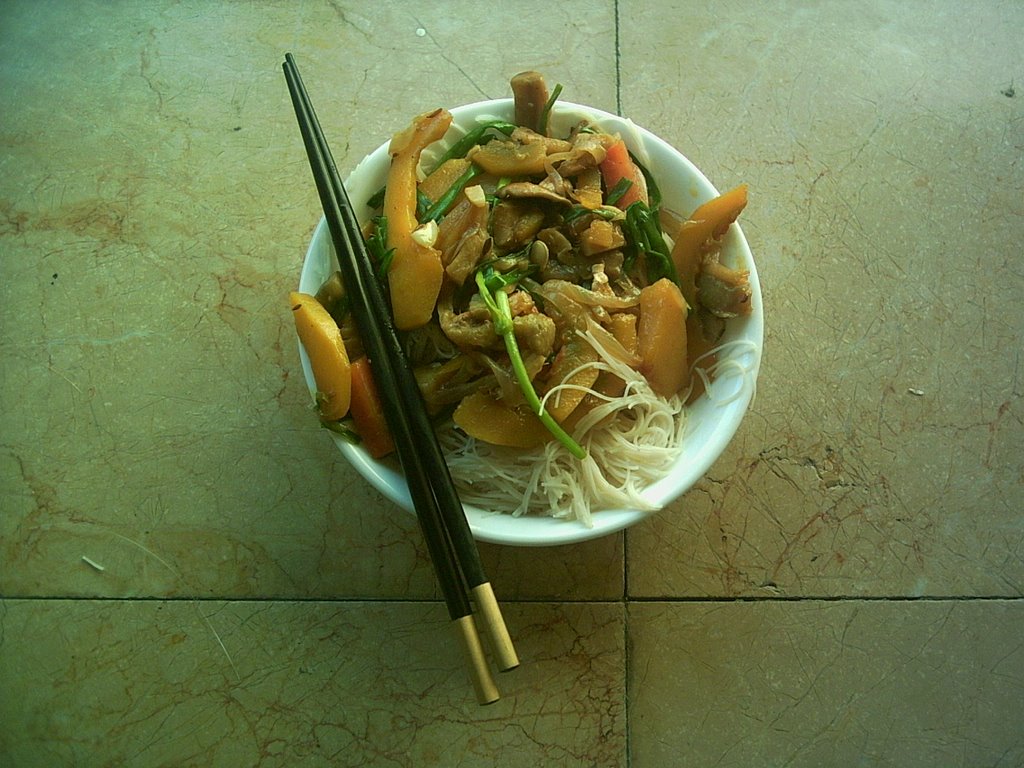
It was a tad - just a tad - less hot the last few days. So, we rolled up our sleeves (absurd - who wears sleeves in this weather?) and set out to cook. In fact, Chad set out to cook. And made this wonderful stirfry.
The eggplant worked really, really well counterbalancing the orange ingredients of the stirfry, which include carrots as well as a special squash called "dalorit". Dalorit is a strange linguistic pun in Hebrew: it combines the words "dla'at" (squash), "dal" (less, not rich in-) and "calorie" (needless to explain). It's a funny little squash, like a ball that has a zucchini extend from it. It can be cooked just like squash and comes out delicious every time.
So:
Eggplant, Carrot and Squash Stirfry
1 medium-sized eggplant
1/2 - 1 dallorit, or a cup of squash, cut into 1/4 inch thick chunks
3 carrots
5-6 champignon mushrooms (optional but really good)
1 large onion
3-4 garlic cloves
1 inch piece of ginger
1/4 cup good quality soy sauce
1 tablespoon caraway or cumin seeds (trust me on this)
1 tsp black pepper or chili flakes
1 tbsp fresh chopped parsley.
100 grams good quality brown rice vermicelli
Slice eggplants into 1/4 inch thick slices, salt and let stand for about twenty minutes. The eggplants will "sweat" out their bitterness. Afterwards, wash with waterr and pat dry with a towel. Slice into smaller pieces. Also, slice onions (quite thinly!) and carrots into rings. Chop ginger and garlic quite thinly.
Heat up some good canola or olive oil in a wok, and add garlic, onions and ginger. Let sautee a bit, until the kitchen starts smelling wonderful. Then add the carrots, squash and eggplant. The eggplant will tend to "drink" up all the oil, and you might have to add some. Now, add soy sauce, seeds and spices.
When vegetables begin softening, boil water and quickly cook and strain vermicelli. Add noodles to the wok with soft vegetables, and toss a bit, just until everything smells and tastes wonderful. Sprinkle fresh parsley and enjoy!
Sunday, August 27, 2006
The Tricky World of Refreshing Beverages

The other day, walking on the beach, a horde of enthusiastic youngsters with matching teeshirts pounced on me happily, chirping about a "new exciting product, here, try it". I looked behind them and saw their booth, belonging to a local mineral water company called Neviot. There were bottles, and plastic cups, and since I was very thirsty I took one and drank it up.
Gaaaah! It was sweet!
Apparently, the odd trend of flavored water has reached Israel.
As I was drinking, a strange sensation of deja vu hit me. After all, wasn't it, like, three years ago that I was accosted by a similar group of youngsters near San Francisco's Powell Station and offered a similar product? Yes, it was quite vile, even then. So now Israel has a line of peach and apple flavored water.
What is flavored water? apparently, it's somewhat of a lighter version of the juice syrups we used to have as kids, only without the food coloring. The water basically contains either sugar or an artificial sweetener and some artificial fruit flavoring, and also some added vitamins. If you are a Coke or Diet Coke drinker, this option might be better for you; but if you think (like me) that sodas taste vile and are vile, why not skip the ridiculous flavored water and drink water, instead?
The constant struggle to find new and exciting ways to quench and refresh us has yielded various interesting trends. I won't even get on the topic of sodas - there's plenty of people talking about that. There are also the sports drinks - again, much like the artificial syrups of our youth, only with the added halo of SCIENCE behind them. Sports drinks contain electrolytes and sugar, and are aimed at replenishing these particles lost in sweat, while encouraging one to drink more. "What's wrong with water?" asks one website, and answers:
Drinking plain water causes bloating, suppresses thirst and thus further drinking. It stimulates urine output and therefore is inefficiently retained. A poor choice where high fluid intake is required. Water contains no carbohydrate or electrolytes.
Yes, water does "cause" bloating. Anything ingested will make stomach expand as it takes some time to absorb. Yes, consuming liquids "stimulates urine output", as they are supposed to; the kidneys and bladder do their job for a purpose. This might, perhaps, be tricky for marathon runners, but for us simple folk there's really nothing better than good quality water. "Flavored water" is not much different from the fake juices of our childhood. Yes, it doesn't have coloring, possibly to make it seem more healthy (which it probably is, to some extent). But the flavor is still there. Want to ask yourself what it's doing there?
It seems that food manufacturers do not believe that we'll drink anything unless there's some sugar and added ingredients to it. Do pour yourself a glass of good water and prove them wrong.
The Merits of Israeli Breakfasts

Breakfast is a touchy subject. It appears that even folks who are ready to experiment with lunch and dinner don't want to confront something strange and unfamiliar when they get up.
While my breakfast preferences have changed over the years, there are still items that surprise me when I travel or stay with friends. The Large American Brunch, for example, completely threw me off when I came to Berkeley. Fried potatoes? And toast? And meat? For breakfast? I couldn't believe people would want to eat that (even if it's served at a good diner, rather than in an abominable Egg McMuffin). My roommate from Taiwan enjoyed a big plate of pork and fried greens at 7am, which was delicious for her and very odd for me. And, when scheduled to give talks in England, Oxford and London hotels insisted on serving fried tomatoes (why spoil a good thing?) and mushrooms, and beans. All these choices apparently work perfectly well for folks who are used to them, but me - I couldn't cope with those items.
My usual morning fare includes a cup of hot water with lemon, followed by fresh fruit; I find it works really well for me and gives me a nice start. But when going out or inviting people in, we often eat the traditional Israeli breakfast, comprised of the following items:
- eggs
- cheese of various kinds
- a big vegetable salad
- bread
- tuna or some smoked fish (optional)
- orange or grapefruit juice
- coffee or tea
Now, Israeli hotels are quite famous for their breakfasts, which include a variety of additional items: fruit, yoghurt, various muesli, granola and cereal options, hot cake, salty and sweet pastries, etc. Even less exciting venues often add good quality tchina. But the egg, cheese and salad are the key components.
What's so good about an Israel breakfast? Obviously, considering that most people eat bread in the morning with their eggs and cheese, it offers a combination of carbs and protein. Count the juice in, and you've got some more sugar and vitamins. If one is into food combinations, the best and safest way to enjoy this is to focus on the eggs, cheese and vegetables.
Thinking about this, the Israeli breakfast is not less strange than other breakfasts. Its appeal to Israelis is in its familiarity, and to tourists - in its novelty. Most people are not used to raw vegetables on their morning plates.
Tuesday, August 15, 2006
Takeout Pet Peeves of the Vegetable Adventurer
Takeout is an inevitable part of city life. Often, we are too tired, lazy or hyper to cook. When one's vegetables are delivered to one's door, it doesn't happen often, but still, there comes a time when you pick up that box or bag or folder of leaflets and browse through them, searching for something that the good city restaurateurs can haul over to your doorstep.
Such, indeed, was my mood a few days ago, when I picked up the Tel Aviv Food Book, proclaiming itself to contain menus for most of the restaurants in Tel Aviv. Now, we are very fortunate here in this respect; there's more than pizza and MG-laced Chinese. The city has hundreds of wonderful food digs and many of them offer deliveries.
However.
However, the offerings in the vegan/vegetarian/whole grain department are pathetically slim. I assume there's not much demand: folks who like wholesome food have often gotten used to making it themselves, thus diminishing the supply market for such foods. But wouldn't you occasionally like someone *else* to bring you your quinoa bowl? Also - it's possible that health food is considered snobbish and expensive; but so are many of the extravagant items on the menu, and whole grains and beans don't have to be expensive, at all.
So, here are some of the things I was disappointed with.
1. I *know* there are organic restaurants in this city. I've *eaten* in them. Why no deliveries?
2. Is it too much to ask for Chinese and Indian restaurants to offer steamed brown rice, in addition to the white rice? I'd be willing to pay more and I bet many others would, too. It could make a whole lot of difference for me. One Indian place already does deliveries with brown rice; others should join.
3. It'd be kind of fun for those of us that eat eggs to be able to order Shakshuka from eggs that don't come from chicken coops. Again: there are people who care about this. Would anyone pick this idea up?
4. How about marking the menus, to let us know which dishes are vegetarian/vegan and which aren't? We hate being pests and asking on the phone "does this have meat?". Yes, there are people who won't eat the soup if it's chicken broth. Yes, there are people who want to know if there are eggs in the cake. Why not help them out?
5. Sometimes, generous restaurants give us really nice offers: if we order a certain value of food, we get desert - free! That's really nice of them. Would it be possible to ask them to extend that good will, and offer a free small salad, or water, instead? Some people in this town are diabetic, and it'd be really nice to treat them to something as well, if they spend a lot of money ordering food from your establishment.
6. We can deal with paper containers. No need to produce and consume all this plastic. How about that? And, while we're at it, most of us can, and will, use our own cutlery. The less plastic in this world, the better.
Thank you for your attention, restaurateurs of Tel Aviv; there are many, many great options for folks who eat locally and ethically, here, if they want to eat out. All we need to do is stretch them out a bit, so they apply to folks who order in, as well.
Such, indeed, was my mood a few days ago, when I picked up the Tel Aviv Food Book, proclaiming itself to contain menus for most of the restaurants in Tel Aviv. Now, we are very fortunate here in this respect; there's more than pizza and MG-laced Chinese. The city has hundreds of wonderful food digs and many of them offer deliveries.
However.
However, the offerings in the vegan/vegetarian/whole grain department are pathetically slim. I assume there's not much demand: folks who like wholesome food have often gotten used to making it themselves, thus diminishing the supply market for such foods. But wouldn't you occasionally like someone *else* to bring you your quinoa bowl? Also - it's possible that health food is considered snobbish and expensive; but so are many of the extravagant items on the menu, and whole grains and beans don't have to be expensive, at all.
So, here are some of the things I was disappointed with.
1. I *know* there are organic restaurants in this city. I've *eaten* in them. Why no deliveries?
2. Is it too much to ask for Chinese and Indian restaurants to offer steamed brown rice, in addition to the white rice? I'd be willing to pay more and I bet many others would, too. It could make a whole lot of difference for me. One Indian place already does deliveries with brown rice; others should join.
3. It'd be kind of fun for those of us that eat eggs to be able to order Shakshuka from eggs that don't come from chicken coops. Again: there are people who care about this. Would anyone pick this idea up?
4. How about marking the menus, to let us know which dishes are vegetarian/vegan and which aren't? We hate being pests and asking on the phone "does this have meat?". Yes, there are people who won't eat the soup if it's chicken broth. Yes, there are people who want to know if there are eggs in the cake. Why not help them out?
5. Sometimes, generous restaurants give us really nice offers: if we order a certain value of food, we get desert - free! That's really nice of them. Would it be possible to ask them to extend that good will, and offer a free small salad, or water, instead? Some people in this town are diabetic, and it'd be really nice to treat them to something as well, if they spend a lot of money ordering food from your establishment.
6. We can deal with paper containers. No need to produce and consume all this plastic. How about that? And, while we're at it, most of us can, and will, use our own cutlery. The less plastic in this world, the better.
Thank you for your attention, restaurateurs of Tel Aviv; there are many, many great options for folks who eat locally and ethically, here, if they want to eat out. All we need to do is stretch them out a bit, so they apply to folks who order in, as well.
Tuesday, August 08, 2006
Orthorexia: The Sickness of Eating Healthy?

Heyya, folks, gather round and I'll give you a lecture that has as much to do with sociology (one of my other loves) as it does about food.
How can you tell if one is sick or healthy? With many physical diseases, it's not a difficult task. If one coughs, sneezes and feels awful - they have a cold or a flu. Things get somewhat trickier in the world of mental illnesses. Sure, popular culture is saturated with examples of extreme psychoses, but less serious patterns - neuroses and disorders - raise a lot of issues. And like many other things, defining a certain set of behaviors as an illness is very much a matter of politics.
Mental disorders appear in a special guide called the DSM. The DSM lists a series of symptoms, and clinicians are supposed to see how many of them are manifested in the patient, in order to establish whether or not a disorder is present (here, take a look). Naturally, the disorders don't just appear in the newest DSM edition by themselves; many professionals have to acknowledge them as such, and there is much controversy about which behaviors and phenomena are and are not included in it. For example, part of the struggle for gay rights recognition had to do with removing homosexuality from the list of disorders in the DSM.
Why am I telling you this? Because in recent years, some controversy has arisen over a certain set of behaviors, which some people would like to see defined as a disorder. They call it "Orthorexia", which, in literal latin means "correct appetite".
According to Steven Bratman, who coined the term "orthorexia" and wrote about it in his book, Health Food Junkies, the disorder consists of a pathological obsession with eating healthy food. For an orthorexic, adhering to rigid nutrition disciplines becomes the focus of life. Eating healthfully and "correctly" is seen as a moral, or even spiritual, virtue; the orthorexic might graudally limit his or her consumption of foods, trying to achieve a "purer" state of being. An orthorexic often feels superior to others who eat a less healthy diet. When "falling off the wagon" and eating something unhealthy, the orthorexic experiences a deep sense of guilt and engages in various health-rites of penance such as fasting.
Now, there's no much sense in defining something as an illness if it doesn't cause harm or suffering. Bratman argues that, in severe cases, an obsession with health food can lead to severe physical damage and even to death. However, even when things are less tragic, limiting oneself to what one deems to be extremely healthy food can seriously impair one's life. People who are more attached to their eating regimes than to other aspects of their lives isolate themselves from friends (restrictive eating habits hinder going to lunch together, and so does consistent lecturing about food!), find it difficult to travel and eat out, and become, to a certain extent, slaves of their diet.
Others oppose the medicalization of health food obsession, for various reasons. One of them is that, in general, being a health nut causes no harm. There is no much cause for concern over someone who gets in nutrients, vitamins, minerals, and is interested in wholesome food; that would lead to stigmatizing half of the food blog community, for goodness sake! Cases in which people are taking upon themselves extreme and restrictive dietary regimes could merely be a manifestation of dogmatic, inflexible thinking patterns in general, and not merit a specific disorder title. Moreover, there is no much basis to distinguish between people whose healthy diet is an aspect of their worldview from folks whose dietary restrictions stem from religious decrees (such as kosher or halal diets). What makes one worldview pathological while the other isn't?
Whether or not you think orthorexia should be medicalized, it's probably a good opportunity to say here: all in moderation, folks. I'm the last person to recommend polished grains, white sugar and saturated fats, but hey, if you feel like having a good ice cream or a nice bit of delicious chocolate, and it doesn't hurt you physically, go right ahead and enjoy it. Yes, we should take good care of our bodies, most of the time. Our bodies will reward us by bearing with the occasional treat we have.
To bring this balance to earth, I'll finish with a short quasi-recipe: Oven fries. As good as, or even better than regular fries. Preheat your oven to 180 degrees celsius. Slice thinly some nice potatoes. Place them on an oiled piece of foil on a baking pan, and sprinkle whatever you like on top. In this house, it's usually rosemary, garlic and chile peppers, but there's endless possibilities. Stick in the hot oven for about 35-40 minutes, then munch to your heart's content. Yeah, it's carbs. Yeah, it's not a nutritional powerhouse. But it's fun. Enjoy.
Sunday, August 06, 2006
Vegetables and Olive Oil and Peace

This post is my contribution to Barbara's "Fresh and Local Challenge" in Tigers and Strawberries; although all of what I cook comes right out of our Chubeza box, this one has summer vegetables in it, and is therefore very appropriate for this season.
The two dishes I have here feature a common ingredient which may not be exactly a spice, but is a very typical flavor in Middle Eastern cooking: fabulous olive oil from the Gallille. It's not easy being cheerful in Israel Aviv these days, as many of you probably can guess from following the news; but cooking with olive oil is a reminder of the ancient, bountiful olive trees all over the north of Israel, which produce our superb oil, and which are now under missile attacks. May these dishes remind all warring parties in the world of the goodness in the Earth, and how living off the richness it offers shouldn't be taken for granted. While many humans are hurt in our current conflict, there are also silent sufferers: plants and animals hit by rockets, forests that die in forest fires. When (if?) this is over, hopefully soon, humans will have to work not only on reconnecting with each other, but also on restoring some of the natural world that is so often harmed by humans fighting with each other. The vegetables, fresh from a field near Latroun, are a reminder of that world.
When you have good ingredients, there's no need to mess with them more than necessary. The fresh flavors speak for themselves. So, while the two dishes I have here are cooked, they're both cooked for a very short time and preserve the vegetables' essence very well. It's a double feature dish: Green Beans with Garlic and Roasted Peppers. The beans are sauteed in a small amount of light broth and, of coruse, garlic. The peppers are roasted on an old pot lid, then steamed in a plastic bag and served with a tiny bit of olive oil and, possibly, balsamic vinegar. This is proof that very simple things can make very festive dishes.
Green Beans with Garlic
4-5 handfuls of fresh green beans
3 large garlic cloves
1 tbsp olive oil
1 tbsp good quality soy sauce
1/2 cup water or vegetable broth.
1/2 tsp chili flakes
1 inch ginger, thinly sliced
1-2 tsps sesame oil
Prepping green beans is a funny task, because no matter what shortcuts you try to take, you *will* have to chop off their corners. I've stopped bothering with lining them up - they are never the same size and it doesn't simplify things... so just chop their corners, will you? Then, slice the garlic cloves, heat the olive oil in a pan or wok, and add the garlic, the ginger and the chili flakes. When a nice garlicky smell fills the room, add the soy sauce and the beans. Stir gently to mix up , and when they're all heated, add some water or broth - just enough so nothing sticks to the pan. Then, cook for a few more minutes, stirring occasionally, until beans get as soft as you like them, but retain their character. Remove from pan, drizzle a bit of sesame oil, and voila.
Roasted Red Peppers
4 large red peppers
1 old lid of a large pan
1 plastic bag
1 tbsp olive oil
1 tsp balsamic vinegar (optional)
This works really well on my stove, which has open fire; folks with electric stoves are welcome to offer ideas on how to do this in other kitchens. Anyway, in my kitchen, I found the best method to do this in Shari Ansky's fabulous book Vegetables. I changed it a bit, but it's essentially the same.
Basicaly, what you do, is turn on the stove and place an old metal lid directly on it. Then, you cut the peppers into eight pieces each, lengthwise, and place the pepper slices on top of the lid. Move them around a bit, so they don't get too burned on one side. You'll start seeing black burns on the peel, which is absolutely fine.
When the peppers all get soft and burned (doesn't this sound a bit like an inquisition method?), you turn off the stove, remove the peppers from the lid (careful! they're hot!) and place them in a plastic bag. tie up the bag and let'em sweat for fifteen minutes (inquisition, indeed). Then, open up the bag: if you want to peel the peppers, this will be very easy now, but you don't have to. You can eat them as they are. Put the peppers in a bowl, and drizzle some olive oil and, if desired, some balsamic vinegar on top.
It'll be time to harvest olives soon, and my family will gather to pick them right off our olive tree in September. Then, we'll be making olives off my grandpa's secret recipe, and they will be good and bitter; a reminder of life in this region, which can be very good, but very bitter at times, and a reminder of the olive branches that bear this fruit, and a hope for peace.
Sunday, July 23, 2006
Anti-Inflammatory Cooking
Cold and flu in the summer are always a strange surprise, though not entirely unexplainable. If you live in a hot area, you'll notice that offices and homes tend to crank up the air conditioner in the summertime, making our daily journeys in and out of buildings a real challenge for our immune system.
Chinese medicine does not recognize illnesses as "flu", but categorizes the entire situation of the person by his or her warmth/coldness, dampness/dryness, etc. What Western medicine would call a cold, or a flu, usually falls into one of two categories: wind-cold and wind-heat. Wind cold is a cold which leads one to be sluggish, cold, and inactive; wind heat tends to be accompanied by fever and redness. Both, but particularly the former, are associated with dampness, which manifests itself as phlegm.
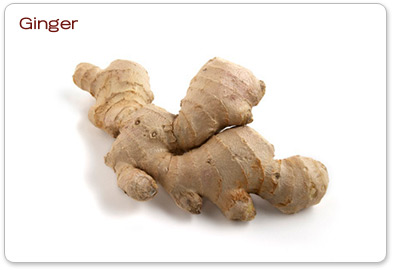
Milk and dairy products are generally considered to increase phlegm in the body, and are therefore not recommended at times when one has a cold. Whether one eats cold or hot foods (which would depend on the type of cold one has), drying, anti-inflammatory foods are of essence. When in doubt, the three winning ingredients are garlic, ginger, and lemon.
Here are some things you might want to try next time you have a cold:
* Ginger-lemon tea (affectionately referred to here as "lemon-ginj")
* Thai curries, preferrably soy-based (coconut milk is a bit rich for ill, sluggish systems, though also good)
* Spicy stir-frys with garlic and ginger
* Tchina with lots of lemon and garlic
* vegetable stock with a bit of grated ginger on top
Be well!
Wednesday, July 19, 2006
Those Big Purple Things
Our two most recent deliveries from Chubeza contained a beautiful surprise: the season's first nice, fresh, purple eggplants. What a thrill! Being a Middle Easterner means that I love eggplants a great deal, and have cooked them in many different ways. There aren't many things that are as local as eggplants; Israelis love them almost as much as they love their tomatoes and eat them in every possible form, from baba ganoush to mousakka to quiches to simply roasted slices with goat cheese and olive oil.
Some people have a hesitant relationship with eggplants. This stems from two main reasons. First, eggplants belong to the nightshade family of vegetables, which has been much maligned in relation to diseases like fibromayalgia. Some nutritionsts recommend avoiding nightshade vegetables altogether, a penalty inconceivable from the perspective of a Mediterranean person: that would mean giving up tomatoes, sweet peppers and potatoes. Ah, the horror! Indeed, nightshades contain a certain amount of poisonous components, but these are, according to most nutritionists, ruined in cooking, and they have several nutritional benefits to offer. Eggplants, for example, contain several vitamins from the B family, as well as manganese, copper, potassium, and folic acid. Not in great amounts, but still, they are all there.
The second reason people fear eggplants is their capacity to absorb unbelievable amounts of oil. Many eggplant dishes are extremely greasy and, while eggplant itself is quite lean, with the oil it can become a bit of a fat trap, albeit a delicious one.
Here's one pretty basic thing you can do with your eggplants. Eggplant salad is magnificent in sandwiches or as a nice dish garnished with vegetable sticks. Here, one finds it often in two combinations: with mayonnaise, and with the more common tchina as baba ganoush. This recipe is my (successful, hurrah!) attempt to recreate my grandma's version, which uses neither, and showcases the eggplant in all its glory.
Eggplant Salad
2-3 eggplants
5 garlic cloves
juice from 1 lemon
Cut the eggplants lengthwise. Unlike other eggplant recipes, there is no need to salt the eggplants or let them "sweat" - the bitterness actually makes this better.
Place the eggplant halves, face down, on aluminum foil, and stick in a 200 degree celsius oven for about twenty minutes. You know the eggplants are ready when their peel becomes all brownish-black and charred.
After taking them out of the oven, we grab a nice spoon and scoop the eggplant's meat into a bowl. This can be a bit tricky, but I urge you to scrape out as much as you can. If you're crazy, like me, you'll enjoy munching on the empty baked peels after you're done.
The eggplant meat goes into the food processor with the lemon juice and the garlic, or, if you like your salad chunkier, you can mash it with a fork.
Excellent stuff.
Some people have a hesitant relationship with eggplants. This stems from two main reasons. First, eggplants belong to the nightshade family of vegetables, which has been much maligned in relation to diseases like fibromayalgia. Some nutritionsts recommend avoiding nightshade vegetables altogether, a penalty inconceivable from the perspective of a Mediterranean person: that would mean giving up tomatoes, sweet peppers and potatoes. Ah, the horror! Indeed, nightshades contain a certain amount of poisonous components, but these are, according to most nutritionists, ruined in cooking, and they have several nutritional benefits to offer. Eggplants, for example, contain several vitamins from the B family, as well as manganese, copper, potassium, and folic acid. Not in great amounts, but still, they are all there.
The second reason people fear eggplants is their capacity to absorb unbelievable amounts of oil. Many eggplant dishes are extremely greasy and, while eggplant itself is quite lean, with the oil it can become a bit of a fat trap, albeit a delicious one.
Here's one pretty basic thing you can do with your eggplants. Eggplant salad is magnificent in sandwiches or as a nice dish garnished with vegetable sticks. Here, one finds it often in two combinations: with mayonnaise, and with the more common tchina as baba ganoush. This recipe is my (successful, hurrah!) attempt to recreate my grandma's version, which uses neither, and showcases the eggplant in all its glory.
Eggplant Salad
2-3 eggplants
5 garlic cloves
juice from 1 lemon
Cut the eggplants lengthwise. Unlike other eggplant recipes, there is no need to salt the eggplants or let them "sweat" - the bitterness actually makes this better.
Place the eggplant halves, face down, on aluminum foil, and stick in a 200 degree celsius oven for about twenty minutes. You know the eggplants are ready when their peel becomes all brownish-black and charred.
After taking them out of the oven, we grab a nice spoon and scoop the eggplant's meat into a bowl. This can be a bit tricky, but I urge you to scrape out as much as you can. If you're crazy, like me, you'll enjoy munching on the empty baked peels after you're done.
The eggplant meat goes into the food processor with the lemon juice and the garlic, or, if you like your salad chunkier, you can mash it with a fork.
Excellent stuff.
Thursday, July 13, 2006
The Leaning Tower of Pesto
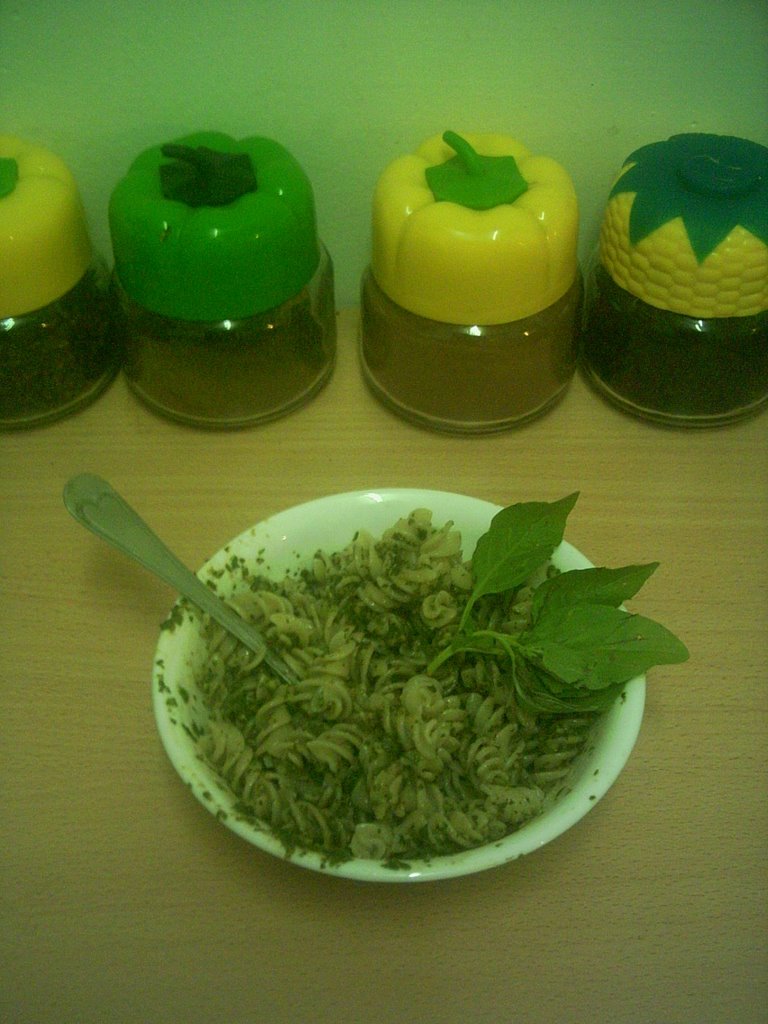
(pic to come)
Yes, we're still jetlagged. But when has that stopped us from eating?
Meals are still regularly served at Hadar and Chad's home, even if they consume their breakfast at 3am, their lunch, well at about 8am, and their dinnner anywhere in between. And since our Chubeza delivery included fresh basil, and we were very hungry, something had to be done immediately.
Fortunately, our food processor was up to the task, and we were able to produce two dangerously unbalanced bowls of Tinkyada brown rice pasta with fresh, simple, homemade pesto. I know, not a remarkable feat. And yet, here it is. I wish I could comment on how well this keeps in the fridge, but as I said, we were hungry, and the entire batch was immediately consumed.
Homemade Pesto Sauce
2 cups fresh basil leaves
1/2 cup excellent quality olive oil
3 tablespoons pine nuts
3 large garlic cloves
1 tablespoon salt
Mix in food processor (adding small batches of stuff at a time). Then, mix with pasta. Eat, enjoy, rest in simplicity.
Subscribe to:
Posts (Atom)