Showing posts with label book reviews. Show all posts

Sunday, January 01, 2017

Book Recommendation: Vegan Richa's Indian Kitchen

Indian food! Delicious, complex, labor intensive... I adore it. Indian restaurants are among the few I still frequent, because it is difficult to replicate the textures and tastes at home. But Richa Hingle's wonderful book and its companion website are true game changers.

With crystal-clear, detailed explanations, careful seasoning, and creative ingredient list, Vegan Richa's Indian Kitchen is an invaluable contribution to our cookbook shelf. It occupies the necessary gap between vanity vegan books, which show pretty but unrealistic concoctions, and basic vegan books, with recipes I already know how to make.

Yesterday we made two of her recipes - palak paneer, which features homemade almond paneer in a rich spinach sauce, and malai kofta, in which the lovely dumpling balls are made of cabbage, cashew, and chickpea flour and cooked in savory tomato sauce. What an incredible meal! Making the paneer and the kofta is very labor intensive, but also intriguing, and the result is impeccable in taste and texture.

Geared toward folks who are not proficient in traditional Indian cooking, and yet not oversimplified, the book empowers us to venture beyond our comfort zone and dare to cook authentic meals with authentic spices. I highly recommend it!

Saturday, January 30, 2016

Food Forests and Other Bright Futures for the Planet

A couple of weeks ago I finished reading Starhawk's new book, City of Refuge. I was very much looking forward to it, being a long-time fan of Walking to Mercury and The Fifth Sacred Thing.  And it was an overall enjoyable experience: familiar characters experiencing new adventures. The two later novels in the chronology are set in the 2040s, after an ecological disaster affects California, splitting it into a Northern utopia-in-recovery and a Southern patriarchal theocracy. The novels interrogate the possibilities that these futures offer by incorporating many elements of present-life Bay Area delights and keeping the environmental stuff as real as possible: San Francisco ("Califia") is a city of water, in which people shuttle around in gondolas on the river, a-la The Blue Greenway. 

But there is one aspect of the new book that made me cringe with discomfort. One of my favorite ecofeminist heroes and authors got it wrong--very wrong--with regard to food.

The citizens of Califia eat very well, and their concoctions, as well as Bay Area booze, are extensively described in the book, especially contrasted to the faux-nutrition "chips" and "sweeties" consumed by the Southerners. Indeed, echoing and crystallizing much of the recent scholarship on our consumption of faux foods, the Southerners have a hard time adjusting to the real food in the north. The book made me feel like Starhawk conjured her favorite meals from the present and planted them in a future in which people's agricultural ingenuity strives the overcome the effects of an ecological horror. Much time is spent in the book on the ways in which my beloved heroes, Madrone and Bird, start their "city of refuge" in the South by starting agricultural production, and the (real) magic of compost is explored in depth.

But what is on the menu in Califia? Much to my surprise, quite a lot of meat, cheese, and eggs, sometimes (but not often) hailed as "humanely raised." Our heroes are served beef and chicken and lamb, eat honey by the bushels, and enjoy dairy with quite some frequency. Oh, there are vegans, of course, but that's briefly described as a "personal choice", with an "option" to order a chickpea-quinoa stew at a restaurant, side by side with the default meat choices.

Not only is this a deeply upsetting culinary repertoire for a presumed utopia, but it's also massively unrealistic, because one has got to ask oneself--where the heck do they even raise all these animals?

Surely, Starhawk must be aware of the massive contribution of animal pasture areas and feedlots to the deforestation and corruption of the earth. Surely she knows that every burger we eat is the equivalent of months of showering. Surely she's heard of waste and manure lagoons covering vast areas and endangering our health. As an avid permaculturist, surely she knows that vegan options are possible, realistic, and cost-effective. In a future affected by climate change, veganism will not be a "personal choice"--it will be a fact of life for everyone.

And, where are all these mysterious cows, lambs, and chickens raised? Where do the chickens lay their eggs? Where are the utopian slaughterhouses? Or do we just not like to talk about the fact that meat comes from animals?

And that's before we even discuss the cruelty involved in the gratuitous raising and killing of animals for our own consumption, which doesn't even begin to be portrayed as being at odds with the deeply Pagan, one-with-nature vibe of Califia. People pray over their food and give thanks to the animals--to the Goddess, to spirit, to whatever--which may make them feel great and a part of the cycle of life, but all these spiritual feel-good florid incantations don't actually affect the animal's fate one bit. For more on the "but I express gratitude for my wild salmon" sensibility and its hypocrisy, read Sherry Colb's excellent Mind If I Order the Cheeseburger?, focusing on the chapter on Native Americans.

Actually, without much effort one could envision a Northern Californian utopia just by looking at one marvelous permacultural initiative: the food forest. Here are several examples of food forests around the world, and for the Hebrew readers among you here's a great story about the new one in Israel. The animals in food forests aren't "raised": they LIVE there. Birds nest in the trees, rodents run around collecting nuts, etc. To the extent that we benefit from their presence there, it's as we would from any naturally-occurring phenomenon.

A world in which all the territories formerly devoted to animal farming are repurposed as food forests and homes for wild animals? Now THAT's what I would consider a really inspiring utopia.

Wednesday, January 07, 2015

My New Cookbooks

To get excited about the transition to veganism, I lined up all my vegan cookbooks in a row. Lots of new ones, as well as some old favorites. Here are the ones I've been using recently:

Afro Vegan: Fabulous! Lots of work, but the authentic condiments and spices are exciting.
The Asian Vegan Kitchen: Ditto. Really great recipes, with no compromises as to the authentic ingredients and spices.
Pure Vegan: Fancy book with pretty pictures. Pretty unrealistic - lots of effort involved - but the things I've made from this, such as the pistachio cake, came out fantastic.
True Brews: terrific advice on kombucha brewing, which I follow to the letter and get fantastic results with every batch. I'll post something about kombucha soon.
Vegan Cupcakes Take Over the World: Funny and useful little book! The carrot cupcakes are fun.
The Vegan Slow Cooker: A bit of a disappointment: their recipes use canned beans, etc. I make my own stuff from scratch.

Which vegan cookbooks do you like?

Saturday, July 16, 2011

Aaaaaand... we're back!

After a three-year hiatus, we're back!

I'm sure all of you, gentle readers, have been around the block many times since our last post about compote in 2008. So have we! We now live and cook in San Francisco. Here we have access to wonderful farmers markets and grocery stores, and also to many new friends with many new recipes.

In this post, I'll just quickly review some of the nutritional changes we've gone through here, and offer a glance at two inspirational food-related books I've very much enjoyed recently.

Back in 2003, I was diagnosed as wheat-intolerant after going through an elimination diet. I then figured out that dairy in large amounts, particularly cow milk, made me ill as well. So, no wheat and very little dairy. I do eat eggs, and in the years since Israel have gradually introduced some fish into my diet. I particularly enjoy cured salmon and sardines, but many other fish as well. Having been vegetarian for a long time, it was a difficult adjustment; but it was very much worth it in terms of my health and well-being. I have much respect for sustainable fishing practices and try to shop and eat accordingly; my relationship with water has become very intimate since I started swimming competitively, in the pool but mostly in open water. So, you'll see the occasional fish on this blog, but for the most part, it's all about vegetables and fruit, as it always was.

Also, I had the privilege to read Joel Fuhrman's Eat to Live.
I absolutely love this book. Usually, diet books aimed at providing "miracle cures" to average Americans exasperate me with their conciliatory tone; God forbid you tell Americans to eat vegetables and stop eating much of the mass-produced industrial crap they consume on a daily basis. Fuhrman makes no apologies in Eat to Live. Basically, he advocates eating vegetables and fruit - lots and lots of them - and add to that beans, and, in lesser amounts, whole grains. Eggs, fish, meat, dairy and the like are to be eaten in rather small amounts. This makes so much sense, not only from a weight loss perspective, but also from a health perspective. Basically, what it requires is something we'd done on this blog for a long time; regarded vegetables as the main course and protein/starch as the side dishes. Brilliant.

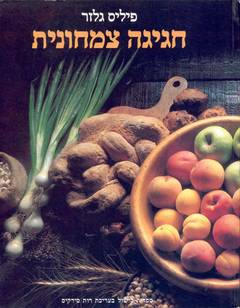
The other excellent book I've read recently is Phyllis Glazer's new cookbook in Hebrew, which offers a myriad of ideas for salads, soups and the like, as well as excellent soups and incredible and healthy desserts. Many of the recipes are flagged as gluten and dairy free. And, she has a recipe for a chocolate cake made of chickpeas, which we've made once and was a phenomenal success.


i know that some of this blog's followers in the past followed it because we were based in Israel. There is no shortage of excellent Bay Area-based food bloggers. We might do a similar thing to what we did in Israel, join a CSA and blog about what we cook, but we've both become much busier than we were in Israel and therefore posting might be sporadic. In any case, good food experiences should be shared, and should you choose to share ours, it'll be a treat to have you in our virtual kitchen.

Thursday, March 13, 2008

Book Review: Becoming Vegan


My fabulous feeling after the juice fast has propelled me to read more about reducing the amount of eggs, fish and dairy that I eat. I came across Becoming Vegan, hoping it wouldn't just be a diatribe about how moral it is not to eat animals; and it didn't disappoint me.

In Becoming Vegan, Brenda Davis and Vesanto Melina attempt - and succeed - to give an intelligent, nutrition-savvy reader a concise collection of all the information he or she needs to plan a vegan diet. While their style may seem a bit dense for readers who know nothing about nutrition, it is refreshing to read a food book that does not dumb down, or simplify, matters for the readers. The book is loaded with recent scientific findings about nutrition, and does not gloss over the possible deficiencies of vegan diets as some others do.

The book assumes that its readers have chosen to explore veganism due to ethical considerations, and its opening chapter provides a short history of vegan movements and organizations. I'm sure this is helpful for many people who might otherwise feel completely alone in their food choices. It then proceeds to tackle the big nutritional questions of enough plant protein, healthy carb choices, fatty acids, vitamins, and minerals. In doing so, the book maintains a healthy balance between numerical tables of nutritional values and practical, down-to-earth advice. Calculating our protein needs is simplified by a formula, and various options are suggested for doing so.

The book goes beyond offering the information, and actually makes menu suggestions for people with different caloric needs, ranging between smaller, inactive folks (1,600 calories) to athletes (4,000 calories). It has a special chapter designed for athletes, which provides good advice on nutrition during training. It also has fabulous information for pregnant and lactating women, which does not gloss over the concern about nutritional deficiencies and emphasizes the importance of feeding babies properly. Other specialized chapters are those aimed at seniors (with lots of practical ideas for simple vegan meals) and at people who are overweight, underweight, or suffer from eating disorders. These are very thorough, and they maintain rigorous scientific objectivity; at no point do readers feel that they are being lectured to, but rather respectfully offered useful information.

One quibble I have has to do with the book's overreliance on prepared commercial "fake meats". I understand the book focuses on the transition to veganism, a stage at which it might be easier for folks to look for store-bought substitutes for stuff they are used to buying. I also understand why such folks might be turned off by the usual vegan/raw literature that might push them to sprout, soak and dehydrate stuff, all of which is fine and good, but isn't very practical on a daily basis. And, I also understand that, in some cases, commercial processing might make some nutrients more easily available, as in the case of calcium. Nevertheless, in recommending lunch "meats", for example, the book neglects to acknowledge that some of them contain lots of wheat gluten and might be problematic for folks suffering from celiac or other intolerances. Perhaps some attention can be given to "the next step" of veganism in the next editions. Another issue has to do with the advice on "vegan diplomacy" offered at the end of the book, which might work in some social situations but not in others.

These are, however, very minor quibbles for an otherwise excellent and helpful book. I think anyone transitioning to veganism, or just in the process of minimizing animal products, would enjoy this book and get lots of benefits from following its information and advice closely. In a publishing market full of hype, superficiality, and dumbing-down, it's great to be regarded by authors as a responsible adult who can read tables, make choices, and personalize information.

Tuesday, July 11, 2006

A Tribute to Phyllis Glazer


Hi, everyone; sorry for having disappeared for so long. I was out of the country, and just came back, still jetlagged and without much motivation for cooking beyond salads and omelettes. In such circumstances, the best I can do for us all is to use this opportunity to pay tribute to a wonderful lady - the "first lady" of vegetarian cooking in Israel: Phyllis Glazer.

Originally from Boston, Phyllis Glazer arrived in Israel and worked as an actress, gradually shifting to the world of vegetarianism. She started writing about healthy cuisine, whole grains and beans, and ecological issues, when none of these was anywhere near the Israeli mainstream. Recently, a festive 25th year anniversary edition of her book Vegetarian Feast was issued; she still writes extensively about vegetarian cooking and eating. Since writing this classic, she's written a second vegetarian book called Phyllis' Kitchen, which is also very good, and also a book about Jewish festival cooking.

I got acquainted with Glazer's work in my early twenties, as a student in Jerusalem. I learned to cook from two sources: my neighbor Frida and Glazer's book. I bought the book somewhere - can't remember well - and made each and every recipe in it, though I didn't follow it to the letter (I always like to invent and improve on written recipes). Glazer taught me the importance of combining whole grains and beans, the possibilities in vegetables I wasn't familiar with, and the secrets of quick breads, an American novelty I hadn't been exposed to. With her book, I made fruit custards, pureed soups, homemade granola, and bean casseroles. My first Irish soda bread came out of that book, as did my first muffins - real, genuine powerhouses of bran and fruit, not flavorless sweet treats. Much of my enthusiasm about healthy nutrition echoes the excitement conveyed by Glazer's writings, and her efforts to make vegetarianism more palatable to the Israeli mainstream.

If you read Hebrew, you'd do good to buy yourself a copy of the book. It's still relevant and useful. And if you don't, you can always wrap a banana in foil and freeze it (Glazer's simple and delicious ice-cream substitute) or make the following leftover dish - my take on one of her classics.

Brown Rice Patties

2 cups cooked brown rice
2 eggs
1/2-1 cup grated vegetables, like zuccini or carrots
1 onion, chopped
1 tablespoon cumin
1/3 cup whole wheat or brown rice flour

Mix all ingredients and make into flattened discs. Fry in olive oil, or, if desired - bake on a baking sheet until brown.