Tuesday, May 02, 2006

Tiny Amaranth Popcorn


People around me LOOOOOVE to talk about food; which works out just fine, because so do I. And one of the topics people feel very passionate about is breakfast. I've often wondered why so many people are willing to try a variety of foods, but insist on having a familiar breakfast. I guess when you get up in the morning you want to face something you know and care for, before the surprises of the day start hitting you...

Here in Tel Aviv, one of the most beloved breakfast traditions is the Israeli breakfast, consisting of fried eggs, a vegetable salad, cheese, bread, orange juice and coffee. In California, going out for brunch meant you'd face fried potatoes and some meat, and sometimes fruit instead of vegetables. When I visited Oxford for a talk, my hotel served cooked tomatoes and mushrooms. Each of these, of course, seems the only viable breakfast option to those used to it...

These days, I usually have fruit, or veg juice, or some light cereal of some sort; the newest invention I've come across is actually quite fun, and it makes breakfast into snacktime. Eating popped grains for breakfast feels a bit like pretending to be sick and skipping school; it's a breakfast that breaks the rules. I don't mean Rice Krispies or anything of the sort, but something that can be made, within minutes, in your kitchen, and tastes lovely on its own, or with your favorite soy, goat or cow morning liquid.

Amaranth Popcorn.

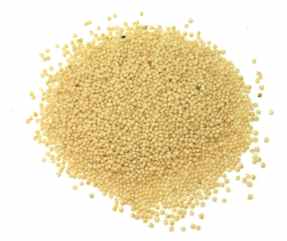
Yeah, Amaranth Popcorn. The concept is quite fun, actually. When in California, I bought Amaranth and didn't know what to do with it; my beloved nutritionist, Anasuya, recommended it as one of the healthiest whole grains. Apparently, amaranth seeds are very high in protein and contain significant amounts of amino acids; it's high in fiber and mineral content, in fact, much higher in fiber than wheat and much higher in calcium than milk. Truly a supergrain. And, as an added bonus, its chemical structure makes its many nutrients available to us even when processed. Which means, folks, amaranth is good for us.

There are many ways to combine amaranth in your diet, and I've tried some of them, and I find that I don't really enjoy cooked amaranth. In her wonderful breakfast book, Sunlight Cafe, Mollie Katzen recommends making wafers out of it, or cooking it into a porridge. You might enjoy this; me, I'll stick to the popcorn option any day.

So, how do you do this?


Popping seeds is quite easy once you know how to do it - "follow these easy assembly instructions", as Tom Waits says, and you'll be left with beautiful amaranth popcorn, with no charred grain or sticky skillets. The only tool you need is a smallish skillet, preferrably with a glass lid. I wouldn't do this in a wok, as the bottom needs to be wide and flat.

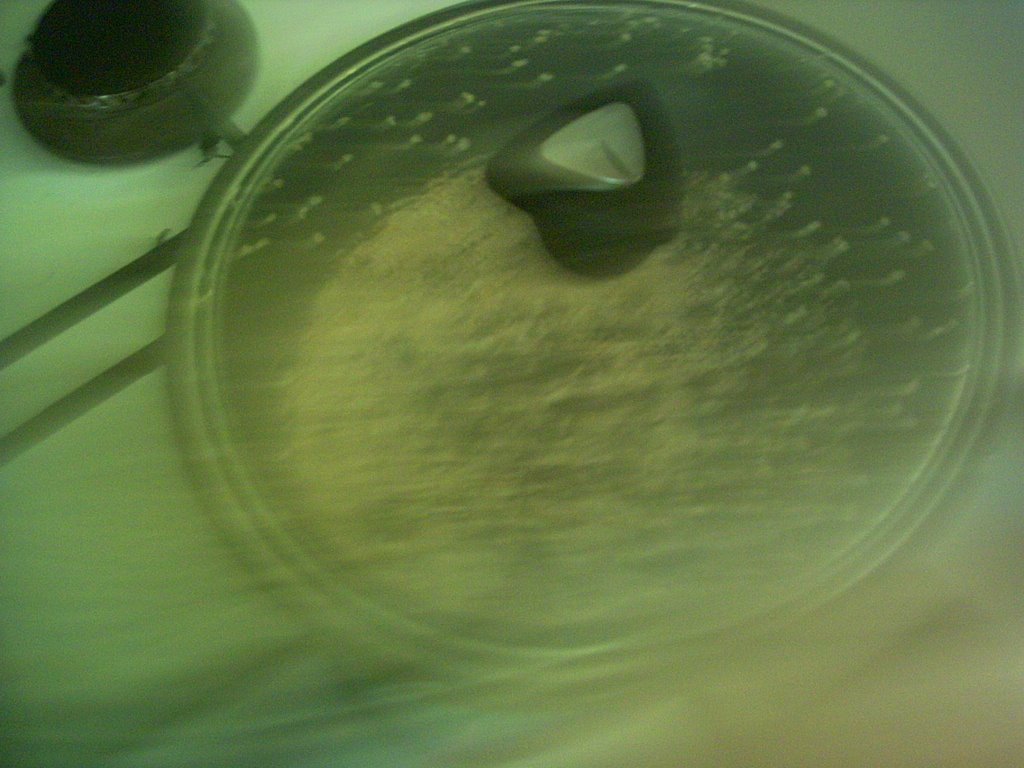
Put the skillet - dry, without even a drop of oil, on the stove. When the skillet is very hot, pour in, carefully, about a tablespoon of amaranth seeds. Avoid covering the entire bottom of the skillet. Quickly cover with the lid. You'll then witness a fun theatre of miniscule popping action (now this is why a glass lid is best; otherwise, you'll just have to trust your ears and listen carefully to the quiet, cute popping sounds). When all the grains have finished jumping merrily in the skillet, pour its contents into a bowl, return to the stove, and repeat with the next batch. Each batch takes, oh, about five seconds, and the entire amount you need will be made easily and quickly. The top picture in this post shows the exciting popping action as it happens.

Now, whaddya do with this thing? You could, of course, snack on it as it is. Or, you could add spices. Amaranth is a bit on the sweet side, but the popcorn will also take nicely to savory options. You could go with any of the following combinations:

Cinnamon, nutmeg, ground clove
Cumin, fennel seeds
Cardamon and cinnamon
Herb salt and pepper
Paprika
Sumak

The spiced popcorn goes well with nuts and yogurt, or with fruit, or on its own. Enjoy!

Saturday, April 29, 2006

The Magical Study Aid Lentil Soup


So, the nice person brought us carrots. And tomatoes. And celery stalks. And celery root. And, I had to do some work over the weekend. So I recalled my very favorite culinary study aid.

Lentil soup.

Yes, it's not a mistake. I work well with lentil soup. I don't drink coffee - not any more - and while I am an obsessive consumer of herbal teas of all sorts, lentil soup is one of my foods of choice for times when I have to work. This is mostly due to nostalgia.

When I was a student in Jerusalem - living next door to the mythological Frida - my life was full of study-related stress. The well-known method of filling myself with black Turkish coffee would leave me jittery, irritable and, well, quite tired once the effect wore off. In addition, we were all encouraged to work in groups on our assignments. A typical assignment, in law school, would be a story, about half-a-page long, resembling a soap opera or a nonsense stand-up comedy, starring demented people with funny names like Mr. Mean and Mr. Belligerent, who incur the most improbable mishaps and complications in their personal and professional lives. We were expected to solve the mess and say who would win the case, and who would argue what. Some of us were quite good at this, and others found it difficult to dig all the important points out of the story. Me, I was often so fascinated with the crazy plot that I found it hard to focus on the legal issues it included; my mind would run wild, thinking about those people and why their lives had gone awry.

The solution to this problem was to invite my three or four favorite pals from school to my 1970s apartment and work on the assignment together, figuring that four brains were better than one. And it was Jerusalem in the winter, and folks would ride two buses to get to the fun-but-slummy neighborhood where I lived, and they would be cold, and wet. So I would feed them soup.

I had several lentil soup recipes, and they all served me well; this one, I think, is a combination of two different recipes. Naturally, this works really well with many sorts of vegetables one might have in one's house, and it becomes even better after a day or two. Give it a try; it's really good stuff. And who knows, perhaps if we fed it to Mr. Mean and Mr. Belligerent, they'd stop arguing, cancel the lawsuit, and we could all sleep in peace.

Magical Study Aid Lentil Soup

Ingredients
Olive oil
5-6 Garlic Cloves
1 large yellow onion
3 tomatoes
3-4 carrots
2 cups of black/green lentils
3 celery stalks, preferrably with the leaves
2 tbsp cumin
1 tbsp curcum (Middle Eastern yellow spice - optional)
a handful of coarsely chopped parsley
water, or vegetable broth
grated good quality goat cheese (optional)

You could soak the lentils beforehand, and it is preferrable, but not essential. If you decide to do it, simply place them in a bowl with water; they'll swell up. Discard the water.
Start with a large soup pot. Heat it over the stove a bit, then pour some olive oil in. When the oil is hot and nearly smoking, chop in garlic cloves and onions, and add cumin, curcum and some of the parsley. Stir until the vegetables are golden and the onions begin to brown.
Then, add the lentils, and chop in the tomatoes, carrots and celery stalks. stir in a bit and mix with the garlic, onion and spices. After everything seems mixed and warmed up, add water or broth to cover. Bring to a boil, then put the lid on and cook for another, say, forty minutes, or until the lentils are very tender. If you make this recipe with red lentils, they'll all dissolve and become puree by now, but black and green lentils tend to retain their shape even when they are tender. Sprinkle the remaining parsley and, if you so wish, the goat cheese, and serve in deep bowls or in large mugs.

There's an interesting twist to this soup. If it's made with less water, you basically end up with a lentil dish which can be served, cold, as a salad. Also yummy, but I find that, to serve this cold, you need to slightly inrease the amount of each spice.

Thursday, April 27, 2006

Double Fennel!


When I started studying at Hebrew University in Jerusalem (fourteen years ago!), I moved into a very large, railway-like building. My apartment had a spacious kitchen right out of the seventies. It had bright orange cupboards, a leaky and moist fridge, and an oven which sometimes worked and sometimes went on strike. In this land of wonders, I first taught myself how to cook.

Before leaving home, food would miraculously appear in the fridge and then on my plate; my mom, who was extremely busy working, didn't enjoy cooking, except when she had to, and I was never playing around the kitchen. But my newfound independence as a student had made shopping for food, and cooking it, a necessity. Fortunately, my new neighbor, Frida, was there to help me!

Frida was, at the time, in her early thirties, already married with three kids and one on the way. In addition, she ran a daycare center from her home, and excelled at it. At any given point you could walk into Frida's immaculately clean house and find her holding a child (hers or someone else's) in one arm, stirring something delicious on the stove with the other hand, and providing some excellent explanations to the kids' questions. She had huge amounts of patience. I admired her, and thought she should have been awarded the Nobel Prize for housekeeping (why don't they award those, actually?). Her household dwarfed my modest cleaning and cooking skills in comparison, and I felt like the rebellious, dysfunctional neighbor. Naturally, we immediately took to each other.

Frida was a fabulous cook, and I got to eat her concoctions every Wednesday at our "tea at 10am" meeting, and often on Friday nights, at their beautiful Shabbat meal, over which her husband, Moshe, presided with a fresh and shiny kippa on his head. Being of Bulgarian descent, Frida knew a lot about Balkan and Middle Eastern cooking, to which I was never exposed in my Ashkenazi family. One vegetable I had never seen before was fennel.

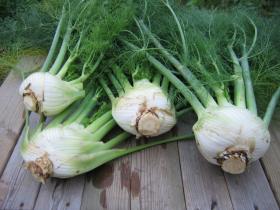
It looked strange, like some sort of a deformed hand with chubby, stick-like fingers, which smelled a bit like dill, only more fragrant. "What do you do with it?" I asked. amazed. Frida, not fearing the monstrous green hand, picked up her big kitchen knife and nonchalantly chopped it to pieces, reserving the feathery leaves. She then made two simple recipes which have become my favorites, and which I made again this week: Fennel salad and fennel yogurt soup. Here they are:

Frida's Fennel Salad

2 fennels

1/2 cup olive oil

juice from one lemon

3-4 garlic cloves, chopped

fresh parsley and cilantro

Chop the fennels up - fear them not! They can be chopped any direction, though preferrably against the grain. Put in a large bowl. Mix all other ingredients and pour over fennel. Mix well. Now, keep in the fridge for at least four hours, so the flavors mix.

Bulgarian Fennel Yogurt Soup

1 quart good quality goat yogurt (unflavored)

3 nice cucumbers, very finely chopped (this is important, folks. It just doesn't taste right if the bits are too large).

about a cup of chopped fennel feathery leaves

5 garlic cloves (or more, or less, to taste)

a bit of black pepper

olive oil, lemon juice

optional: a few finely-chopped radishes

Mix well and refrigerate. That's all, folks. Super wonderful on a warm day.

Wednesday, April 26, 2006

Vegetable Adventures Launch


Hello Friends, Old and New!

This blog follows my culinary adventures with vegetables, and particularly, with a surprise box of vegetables, delivering various wonderful edible toys right to my door. You can expect to read of Chinese medicine and nutrition, various interesting types of vegetables, lots of recipes, mostly with a Middle-Eastern twist, healing with food and herbs, and occasionally some other issues might sneak in: ecology, music, dance, martial arts, jewelry making, a dash of healthy idealism, and way too many books.

We may want to start with the folks who grow the vegetables. Oh, wait, we may want to set the stage for the vegetable arrival.

My partner, Chad, and I live in a lovely small apartment right near the Tel Aviv beach, in a neighborhood called "The Yemenite Vine". The neighborhood is a colorful, vibrant and honest mix of folks who came to Israel from Yemen in the 1960s and of newcomers - young Israelis and many African, Asian, Eastern European and South American workers. The heart of the community is Hakarmel Market, a huge Middle Eastern market selling all kinds of produce, groceries, house equipment, etc. On the other side of the neighborhood is the Mediterranean Sea - on the shore of which are the Tel Aviv skyscrapers and Jaffa's ancient buildings. Tel Aviv is a culinary heaven, offering endless restaurants and cafes, and Jaffa offers the very best Middle Eastern food one can think of. Under such ideal conditions, how can there not be a Yemenite Vine food blog?

Now, here's where the vegetables come in.

About a month ago I made friends with some environmentalist friends, who introduced me to community farming and organc produce, and who let me know of such farms in Israel. Ecology, organic agriculture and recycling is not a very high priority here yet, save for a few isolated areas. Naturally, we were thrilled to give these folks a try. So, we are now the proud members of the Chubeza organic farm:

http://www.chubeza.com

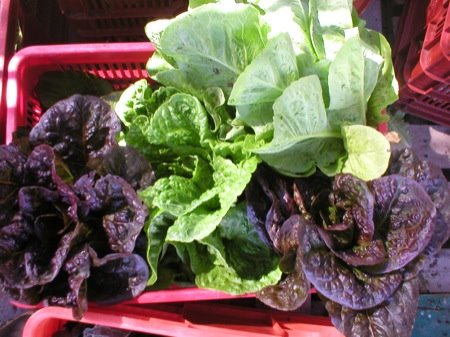
(that's where the lovely lettuce picture comes from, actually)

Every Monday afternoon, a nice person knocks on our door and delivers us a big box of vegetables. We have no control over the contents of the box, which makes all this even more fun! We get a great variety of seasonal vegetables. Our whole grains, beans and occasional dairy products and eggs come from the nearby market, or from Jaffa's Middle-Eastern stores. Our mission is to cook and consume all this goodness within a week; your mission, should you choose to accept it, is to read of our adventures in the kitchen, provide advice, ask and answer questions, and suggest your own recipes, if you feel like it.

Ah, but there are tricky rules. We're both vegetarians (I rarely and occasionally eat fish, but not usually at home); being a big fan of Traditional Chinese Medicine, my cooking is geared toward healing rather than just pleasure and at least tries to follow Five Element Theory (zang-fu). We're not big fans of sugar, refined grains, or processed foods; and we don't usually combine animal protein with hard-core starches. Nevertheless, we've been known to make mean dinners, and to produce fun giant weekend brunches; we both love to cook and do it often.

This week, the lovely people of Chubeza have graced us with the following ingredients:
Tomatoes
Cucumbers
Arabic lettuce (like Romaine, only large and a tad stiffer)
Manguld (wild beet leaves)
Collard Greens
Kohlrabi
Turnips
Fennel
Carrots
Potatoes
Cauliflower
Cabbage

Let the fun begin!